Author Archives: Caleb Components

Why Choose DIN 472 Circlips?

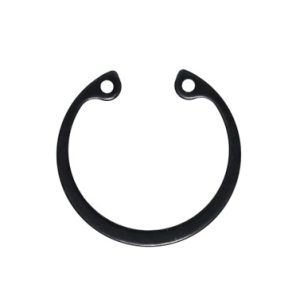
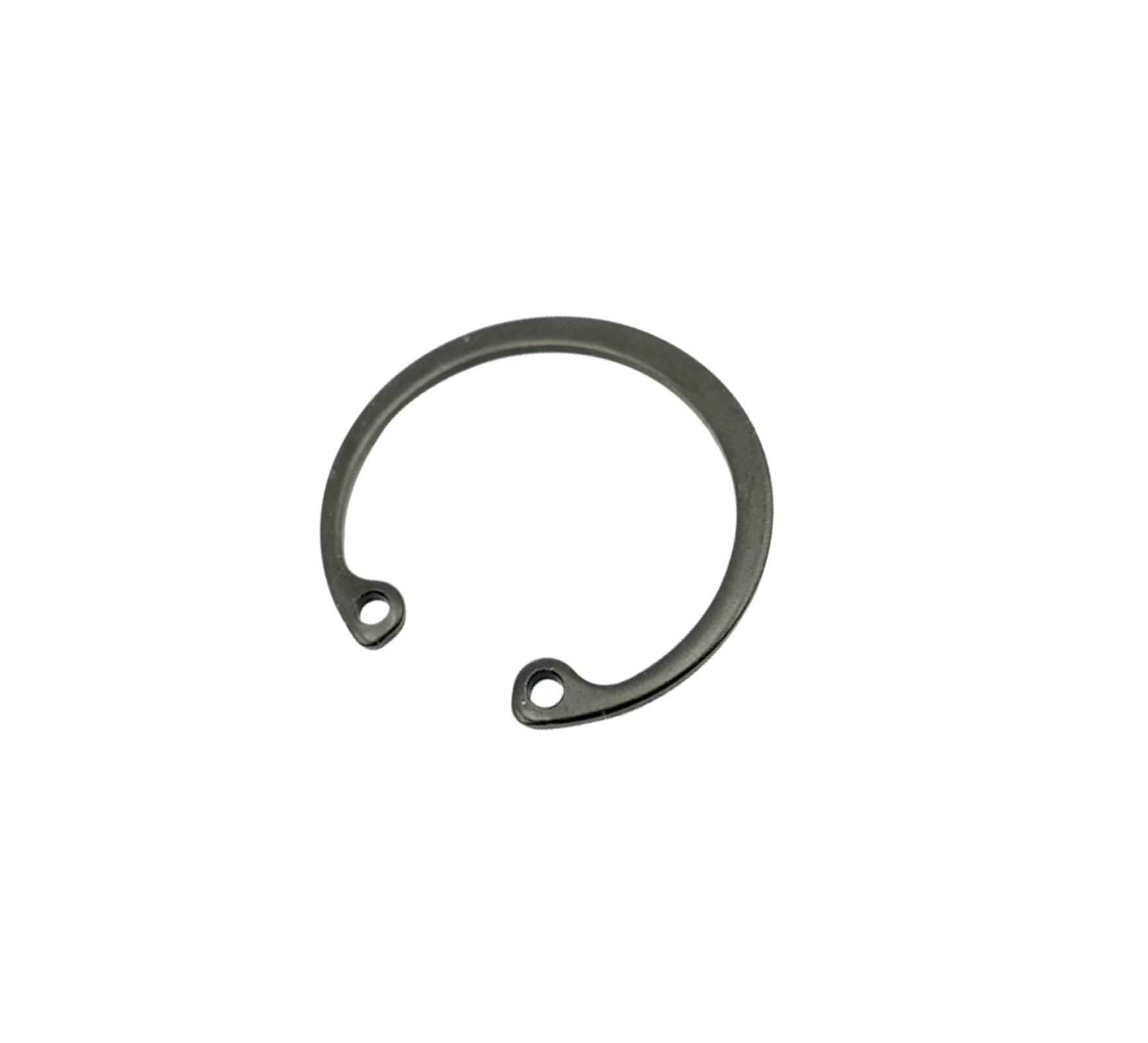
When precision engineering demands reliable, high-capacity retention inside a bore, look no further than the DIN 472 Internal Circlip. Engineered as the definitive safety device for components fitted within internal grooves, these premium retaining rings ensure that your bearings, pins, and assemblies remain locked firmly in place, even under heavy uniform thrust loads.

Maximum Thrust Load Capacity: Featuring an optimized free diameter and gap width, our circlips seat tightly into internal grooves, transferring substantial axial forces securely to the housing wall.
Rapid Installation & Maintenance: Designed with integrated luggage holes, they allow for instant, controlled fitting and removal using standard circlip pliers.
Eliminate Bulky Hardware: Replace heavy threaded fasteners, shoulder plates, and pins with a sleek, low-profile alternative that saves weight and space.
Industrial-Grade Materials: Available in high-tensile Carbon Spring Steel (with a protective phosphate and oil finish) or corrosion-resistant Stainless Steel for marine and harsh chemical environments.

Specifications & Availability

  • Bore Diameters Supported: Broad metric size range from 8.0mm up to 200mm+.
  • Manufacturing Standards: Fully compliant with strict metric DIN 472 guidelines for dimensional accuracy and structural tolerance.

Browse our range of DIN 472 Internal Circlips using the links below.
⚙️ Why Top Engineers Specify Our Preload Wave Washers

In high-performance electric motors, gearboxes, and pumps, even a fraction of a millimetre of axial play can cause devastating wear, heat, and early failure. Standard washers can’t fix it.

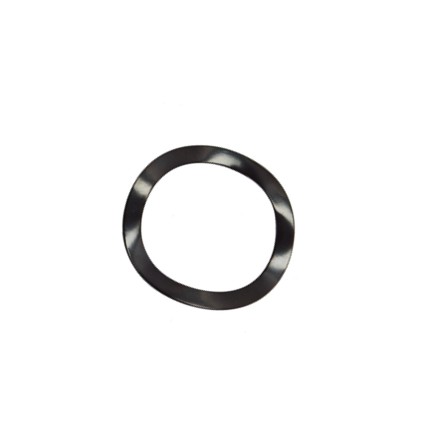
Our engineered Preload Wave Washers are specifically designed to deliver continuous, predictable axial force to ball bearings. By eliminating clearance, they ensure smoother rotation, drastically reduce operating noise, and extend the lifespan of your entire assembly.


  • Perfect Bearing Preload: Delivers precise, low-to-medium axial force to the outer ring of ball bearings, minimizing skidding, vibration, and friction.
  • Radical Space Savings: Replaces bulky helical springs, reducing axial space requirements by up to 50% without losing force consistency.
  • Compensates for Thermal Expansion: Dynamically adjusts to temperature changes and dimensional tolerances during heavy-duty operation.
  • Premium Materials: Manufactured from high-grade spring steel and stainless steel options to ensure excellent fatigue resistance and zero structural sag over millions of cycles.

🛠️ Tailored for Precision Industries:

  • Electric motors and power tools
  • Aerospace and automotive drivetrains
  • High-speed pumps, fans, and rotating machinery

Order a wide range of Wave Washers Online…

📏 Split Cotter Pins: Finding the right size

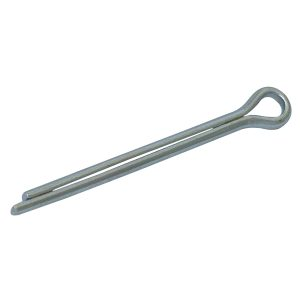
To identify the right size split cotter pin, you must match the nominal diameter of the pin to the diameter of the drilled hole, and ensure the effective length is long enough to bend after passing completely through the assembly.

Split cotter pins (governed by standards like DIN 94) are uniquely sized by the hole they are fitting into, not the actual width of the wire

1. Determine the Diameter

  • Measure the Hole: Use a vernier caliper, drill bit, or pin gauge to measure the inside diameter of the hole you are trying to fill.
  • Match the Nominal Size: If your hole measures 4 mm, you need a 4 mm nominal split pin.
  • The Manufacturer’s Clearance: Do not worry if the actual wire thickness feels slightly smaller when you measure it with calipers. Under DIN 94 Standards, the actual pin diameter is manufactured undersize so it slides through the hole smoothly without lateral play.
  • Avoid Under-Sizing: Never use a pin that is too small for the hole. Vibration will cause a loose pin to wear the hole into an oval shape over time, leading to eventual mechanical failure.

2. Determine the Effective Length

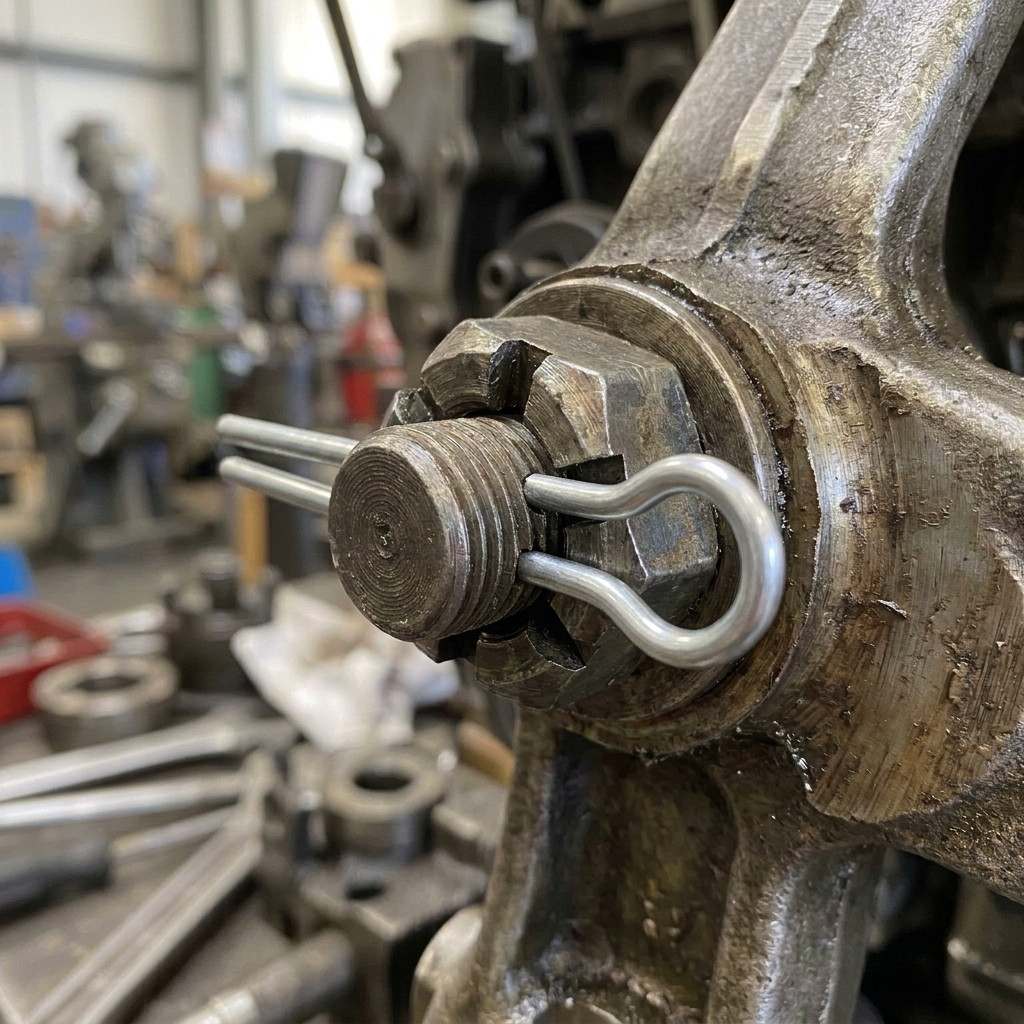
  • Measure the Component Thickness: Measure the total distance the pin needs to travel (e.g., the width of the shaft or the distance through a castle nut).
  • Account for the Prongs: The “effective length” of a split pin is measured from the underside of the loop (the head) to the tip of the shortest leg.
  • Add Clearance for Bending: Choose a length where both legs extend past the exit hole by at least the thickness of the pin’s diameter. This ensures you have enough leverage to bend the tines back securely with pliers.

You can order these parts in Mild Steel Zinc Plate and Stainless Steel through our online store.

DIN 471 and DIN 472 Circlips: The Engineering Essentials for Shaft and Bore Retention

In mechanical engineering, securing components onto shafts or inside bores without adding excessive weight or bulk is a foundational challenge. The industry standard solutions for this are DIN 471 and DIN 472 circlips—also known as retaining rings. Though they look similar to the untrained eye, these two fasteners serve opposite geometric purposes. Understanding their differences, installation methods, and failure modes is critical for ensuring machinery longevity and safety.


The Core Difference: External vs. Internal

The fundamental distinction between DIN 471 and DIN 472 lies in where they are mounted and how they exert their spring force.

  • DIN 471 (External Circlips): These are designed to secure components onto the outside of a shaft. They are installed into a machined groove on the shaft’s exterior. To fit them, the ring must be expanded outward using specialised pliers. Once released, the ring tightly grips the bottom of the groove. The lug ears (the tips with the small holes) point outward so they do not interfere with the shaft surface.
  • DIN 472 (Internal Circlips): These are engineered to retain components inside a bore or housing. They fit into a groove machined into the internal wall of a hole. During installation, the ring is compressed inward. Once inside the bore and aligned with the groove, it expands outward to lock itself into place. The lug ears point inward to prevent interference with the housing wall.

Design, Geometry, and Materials

Both standards dictate a tapered radial wall design. The ring is thickest opposite the opening and tapers down toward the lugs. This specific geometry ensures that the circlip maintains a perfectly circular shape when expanded or compressed, distributing clamping pressure evenly around the entire circumference of the groove.


Critical Engineering Considerations

Successfully implementing DIN 471 and DIN 472 circlips requires precise calculation of the application’s mechanical limits:

  1. Groove Dimensions: The depth, width, and sharpness of the groove radii are strictly defined by the DIN standards. If a groove is machined too shallow, the ring will not seat completely, drastically reducing its load capacity.
  2. Thrust Load Capacity: Circlips are designed to withstand axial forces (forces pushing along the length of the shaft or bore). This capacity is split into two limits: the shear strength of the circlip itself and the load-bearing wall strength of the groove material. If the groove material (e.g., aluminium) is softer than the spring steel circlip, the groove wall will fail long before the circlip shears.
  3. Centrifugal Force (DIN 471 specific): Because external circlips cling to a shaft, high-speed rotation can cause centrifugal force to expand the ring outward. If the shaft spins fast enough, the circlip can lift out of its groove entirely. For high-RPM applications, special self-locking circlips or heavy-duty variations must be used.

Best Practices for Installation and Maintenance

Improper handling is the leading cause of circlip failure. Engineers and technicians should adhere to the following guidelines:

  • Use the Right Tools: Always use dedicated circlip pliers (external pliers for DIN 471, internal pliers for DIN 472). Using screwdrivers or makeshift tools bends the rings permanently.
  • Avoid Over-stressing: Only expand or compress the ring just enough to clear the shaft or enter the bore. Over-stretching exceeds the material’s elastic limit, leaving the ring permanently deformed. A loose circlip will quickly vibrate out of its groove.
  • Orientation Matters: Circlips are stamped out of sheet metal, leaving one sharp edge and one slightly rounded edge. The sharp edge should always face away from the retained part to ensure maximum contact area against the groove wall.
  • Never Reuse Stressed Rings: If a circlip has been removed during maintenance and shows signs of permanent distortion or loss of tension, it must be discarded and replaced.

Premium Split Cotter Pins: Secure Your Machinery with Confidence:

When heavy machinery, automotive components, or industrial equipment are on the line, you cannot afford to let a single nut or bolt vibrate loose. Prevent mechanical failure before it starts with our industrial-grade Split Cotter Pins.

Engineered for maximum reliability and effortless installation, these pins provide the ultimate mechanical lock for clevis pins, slotted nuts, and retaining systems.

Why Engineers and Mechanics Choose Our Cotter Pins:

  • Uncompromising Strength: Manufactured from high-tensile steel, stainless steel, and brass to withstand intense shear forces and harsh environments.
  • Corrosion Resistance: Available with premium zinc plating to fight off rust, moisture, and chemical exposure, ensuring a long operational lifespan.
  • Flawless Installation: Features an extended prong design (one leg slightly longer than the other) for quick, hassle-free insertion and easy bending.
  • Universal Compatibility: Available in a vast range of standard metric and imperial sizes—from micro-machinery applications to heavy-duty agricultural equipment.

Whether you are performing routine fleet maintenance, assembling aerospace components, or working on a weekend automotive restoration, ensure your fasteners stay locked in place.

Keep it together. Keep it safe. Choose our Split Cotter Pins.

🔒 STOP THE SLIP: Maximize Joint Integrity with Heavy-Duty DIN 6796 Disc Springs

When standard washers flatten out and fail under pressure, Heavy-Duty DIN 6796 Disc Springs keep your critical bolted connections locked down tight. Engineered specifically for high-strength bolted joints, these conical washers act as powerful disc springs to counteract the devastating effects of bolt stretch, relaxation, and thermal expansion.

Why Leading Engineers Specify DIN 6796:

  • Unmatched Preload Retention: Delivers high spring force to maintain constant tension, effectively preventing loosening caused by heavy vibration or dynamic loads.
  • Heavy-Duty Construction: Manufactured from premium carbon spring steel and stainless steel, built to withstand extreme mechanical stress.
  • Thermal Shock Resistant: Ideal for high-temperature environments where metals expand and contract, ensuring your joints remain secure.
  • Optimized for High-Tensile Bolts: Perfect for use with property class 8.8 and 10.9 bolted connections.

Perfect For: Heavy machinery, automotive assemblies, structural steelwork, electrical power distribution, and high-vibration industrial equipment.

Precision-Engineered Metric Key Steel: The Backbone of Your Machinery

Eliminate shaft slippage and secure your power transmission with our premium-grade Metric Key Steel. Manufactured to exact dimensional tolerances, our key stock provides an ultra-precise, interference-free fit for all your standard metric keyways, pulleys, gears, and sprockets.


❓ How It Works

  1. A slot called a keyway is cut along the rotating shaft.
  2. A matching slot is cut inside the hole (bore) of the gear or pulley.
  3. A piece of key steel is cut to length and placed into the shaft’s keyway.
  4. The gear or pulley is slid over the shaft, trapping the key between both slots and locking them together.

Key Characteristics

  • Tight Tolerances: Key steel is drawn to highly precise dimensions (often conforming to standards like DIN 6880) so it fits tightly into keyways without wobbling.
  • Sharp Edges: Unlike general-purpose steel bars, key steel has clean, square corners to ensure full contact inside the slot. [1]
  • High Strength: It is typically made from medium-carbon steel (like C45 grade) or stainless steel to withstand massive shearing forces during operation.

Whether you are performing routine plant maintenance, repairing agricultural machinery, or building custom precision drives, our key steel delivers the shear strength and reliability your torque demands.

Keep your production lines moving. Order your metric key steel today.

Why Closed Type Tool Clips are a Storage Game-Changer

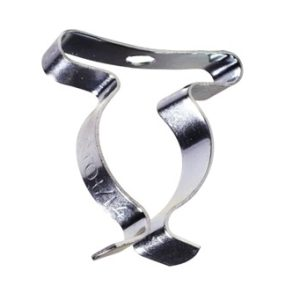
Whether you are setting up a professional industrial workshop, organising a commercial garage, or neatly lining up tools in your home DIY shed, how you store your gear matters. If you have ever used wall-mounted storage, you are likely familiar with spring clips. However, when it comes to maximum stability and security, closed type tool clips (frequently referred to in the UK engineering and trade industries as Terry Clips) are the gold standard.

While open type clips offer a narrower base for tight spaces, closed type tool clips feature a distinctive wide-base design where the spring steel loops completely around to form a highly stable, enclosed mounting footprint.

Here is a breakdown of why these robust fasteners are the ultimate choice for securing your equipment.

1. Engineered for Heavy-Duty Grip Strength

Closed type clips are manufactured from high-quality carbon spring steel. Because the metal arms curve deeply around the object and sit on a wider base, they exert uniform, dependable tension. When you push a tool into a closed clip, it “snaps” into place with a powerful mechanical hold. This robust grip prevents heavier items—such as long pry bars, heavy wrenches, or metal pipes—from sagging, slipping, or getting knocked loose off the wall.

2. Superior Stability with a Wide-Base Design

The primary physical difference between open and closed clips is the mounting base. Closed type variants have a wider, flat structural base that distributes weight evenly across the mounting surface. This design minimizes side-to-side wobble and prevents the clip from twisting or tearing away from your wooden backboard, van racking, or masonry wall when you pull a stubborn tool out.

Note: Standard sizing from 6mm up to 45mm grips typically utilize a single, centralized screw fixing hole, while extra-large 50mm, 63mm and 75mm industrial variants often feature dual fixing holes to handle substantial mechanical loads.


Typical Applications for Closed Type Tool Clips

Because of their industrial-grade dependability, you will find these clips utilized far beyond basic tool wall panels:

  • Vehicle & Fleet Racking: Securing emergency tools, fire extinguishers, and torches inside moving utility vans, trucks, or boats where vibrations would rattle loose parts out of open hooks.
  • Fluid Power & Pneumatics: Serving as clean, structural routing brackets for industrial pipes, copper tubes, and hydraulic hoses along machinery frameworks.
  • Domestic DIY Storage: Cleanly hanging garden tools, spirit levels, extension cords, and mops in household utility rooms or sheds.

Stop Stripping, Rusting, and Failing: Switch to Phosphor Bronze Roll Pins

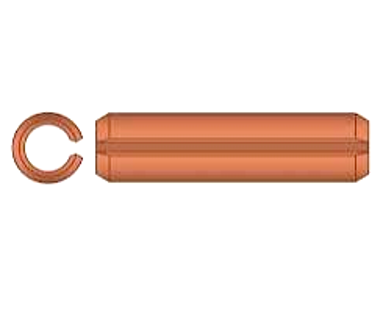
Are standard steel Roll Pins (Spring Pins or Sellock Pins) ruining your high-performance designs? Whether you are battling severe marine corrosion, magnetic interference, or catastrophic galling in moving parts, ordinary fasteners just don’t cut it. You need a spring pin engineered to survive where others fail.

Introducing our premium Phosphor Bronze Roll Pins—the ultimate heavy-duty fastening solution for elite engineering.

Why Engineered Assemblies Choose Phosphor Bronze:

  • Zero Rust, Total Corrosion Resistance: Impervious to saltwater, freshwater, and harsh chemicals. Perfect for marine hardware, offshore equipment, and outdoor installations.
  • 100% Non-Magnetic: Ideal for sensitive aerospace avionics, medical imaging machinery, and advanced electronics where magnetic fields destroy accuracy.
  • High Conductivity: A copper-based alloy that pulls double duty, providing a rock-solid mechanical joint while serving as a reliable electrical grounding path.
  • Anti-Galling & Low Friction: Naturally self-lubricating against harder metals, eliminating the risk of binding, seizing, or wear on high-cycle pivot points and hinges.
  • Maximum Spring Retention: Infused with phosphorus for elite elasticity, ensuring a permanent, high-friction grip that refuses to back out under intense vibration.

Built for Demanding Industries:

From aerospace cockpits and marine rigging to industrial switchgear and automated assembly lines, our Phosphor Bronze Roll Pins provide the permanent, self-retaining hold your reputation relies on.

Please get in touch today for a free quotation.

Eliminate Play. Perfect Your Fit. Precision Shim Washers.

When a fraction of a millimetre makes the difference between flawless operation and catastrophic wear, you cannot afford to compromise. Our premium-grade Shim Washers are engineered to deliver micro-precise spacing, eliminating unwanted axial play and ensuring perfect component alignment in your most critical assemblies.

⚙️ Applications Across Industries

Our shim washers are trusted by engineers, machinists, and technicians across demanding sectors:

  • Automotive & Motorsport: Preloading bearings, setting gear backlashes, and adjusting suspension geometry.
  • Aerospace & Defense: High-tolerance spacing in environments where component failure is not an option.
  • Manufacturing & Robotics: Aligning automated tooling, ball screws, and rotating shafts.
  • Power Transmission: Precision spacing within gearboxes, pumps, and electric actuators.

🛡️ Built for Tolerance. Engineered for Performance.

Whether you are eliminating end-play in a high-speed electric motor, calibrating a automotive differential, or maintaining heavy industrial machinery, our shims provide the exact spacing you need.

FeatureSpecifications & Advantages
Micro-Precise ThicknessesAvailable from 0.1mm to 3mm for ultra-fine adjustments.
Premium Material GradingChoice of A2 Stainless Steel or Carbon Spring Steel
Burr-Free EdgesPrecision stamped and deburred to guarantee completely flat seating and uniform load distribution.
Comprehensive Size RangeInternal Diameters (ID) and External Diameters (OD) matching all standard metric fastener sizes, plus custom dimensions on request.

🏁 Why Top Mechanics Choose Our Shims

  • Micro-Adjustment Versatility: Available in ultra-fine increments so you can stack or single-source the perfect clearance.
  • Zero-Burr Stamping: Every shim is precision-stamped and completely deburred. You get perfectly flat seating and uniform load distribution every single time.
  • Standard Automotive Sizing: Perfect fitments for standard metric and imperial shaft, spindle, and fastener diameters.

📦 Ready-to-Ship Kits

  • Pre-Packed Assortment Kits: Keep a comprehensive range of thicknesses on hand. Our heavy-duty organizer kits ensure you always have the right shim when unexpected downtime strikes.

⚡ Built for the Trade: The Online Checkout Advantage

  • Real-Time Stock Levels: See exactly what is sitting on our shelves before you hit buy—no ghost inventory, no unexpected backorders.
  • Search by Dimensions: Don’t waste time scrolling. Filter instantly by Inner Diameter (ID), Outer Diameter (OD), or Thickness to find your match in seconds.
  • Next-Day Workshop Delivery: Order before 2pm Monday - Friday (UK MAINLAND ONLY) for guaranteed next-working-day dispatch directly to your garage.