Author Archives: Caleb Components

Extractable Dowel Pins: The Engineer’s Guide to Reusable Alignment

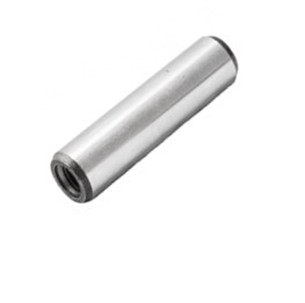
Extractable dowel pins (also known as pull dowel pins) are specialized, precision-ground fasteners used to accurately align, position, and hold machine components together while allowing for easy removal from blind holes. Unlike standard dowel pins, which require an exit hole to be punched out from behind, extractable dowel pins feature an internal thread. This internal thread allows engineers to easily pull the pin out from the front using a matching screw or a specialized slide-hammer extraction tool.


How Extractable Dowel Pins Work

Standard dowel pins work beautifully in through-holes. However, when a dowel pin is pressed into a blind hole (a hole that does not go all the way through the material), removing it later becomes a destructive and frustrating nightmare.

Extractable dowel pins solve this specific issue through a simple design:

  • Internal Threading: The core of the pin is tapped with a standard metric or imperial internal thread.
  • Air Vent Flat: Most pull dowels feature a small ground flat side or an axial vent groove. This prevents air pressure from trapping the pin inside a blind hole during installation or removal.
  • Tapered Options: Some extractable dowels feature a slight taper, making them even easier to release from heavy-duty industrial machinery.

To extract the pin, a technician simply threads a bolt, threaded rod, or slide-hammer tool into the top of the pin and pulls it straight out without damaging the surrounding mating surfaces.


Key Benefits in Industrial Applications

Implementing extractable dowel pins over standard fasteners offers three primary advantages:

  • Effortless Maintenance: They completely eliminate the need for drilling out stuck pins, reducing machinery downtime from hours to seconds.
  • Component Protection: Because removal forces are applied inline via the thread, the surrounding precision-machined holes are protected from scratches, warping, or widening.
  • Infinite Reusability: Manufactured from hardened alloy steel or stainless steel, these pins can be inserted, extracted, and reused across hundreds of maintenance cycles

Technical Specifications to Consider

When sourcing extractable dowel pins for a project, pay close attention to these critical dimensions:

  • Nominal Diameter & Tolerance: Usually ground to precise tolerances (such as m6 or h6) to ensure an interference fit or tight clearance fit.
  • Thread Size: Standard sizing dictating the pull tool needed (e.g., an M6 diameter pin might feature an M3 or M4 internal thread).
  • Hardness Rating: Typically hardened to HRC 58-62 to ensure the extraction threads do not strip out under high pulling forces.
How Starlock Washers Work

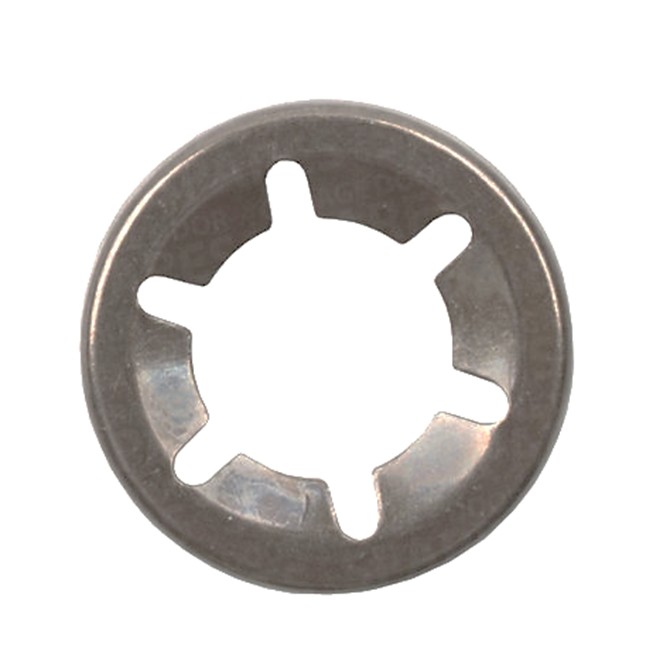
Starlock Washers are a highly efficient type of push-on fastener used to permanently grip smooth, unthreaded cylindrical shafts. Unlike standard washers that sit under a nut to distribute pressure, Starlock washers function as standalone retaining clips that bite deeply into a shaft to prevent components from working loose.

Here is a comprehensive breakdown of how they work, their key variations, and where they are most commonly used.

Starlock Washers feature a unique, angled internal tooth design that points inward.

  • Zero Threading Required: You can slide the washer down a plain metal, plastic, or composite axle without cutting any threads.
  • Instant, Permanent Lock: As the washer pushes onto the shaft, the inner teeth deflect outward. The moment any back-off force is applied, those sharp teeth bite aggressively into the shaft.
  • Vibration Resistant: They exert continuous initial tension, making them highly effective at preventing parts from rattling loose on moving machinery.
  • One-Way Assembly: Once secured, they are nearly impossible to slide back off without destroying the fastener.

Common Applications

Because they eliminate the time and cost of machining snap-ring grooves or threading shafts, you will find them everywhere in consumer and industrial assemblies:

  • Wheeled Goods: Safely retaining the wheels on the smooth metal axles of prams, pushchairs, toy cars, and hand trucks.
  • Automotive & Aerospace: Securing interior panels, insulation covers, and light mechanisms.
  • Domestic Hardware: Frequently found on the standard square shafts of garage door handles.
  • Manufacturing: Pushing onto precision-machined tubes, cast parts, or plastic studs during fast-moving automated assembly lines.

Browse our full range of Starlock Washers Online:

The Unsung Hero of Machinery: A Complete Guide to Key Steel

When you look at a piece of heavy machinery, a vehicle engine, or an industrial pump, your eyes are naturally drawn to the massive components: the spinning shafts, the heavy gears, and the roaring motors.

But deep inside those connection points lies a tiny, unassuming rectangular bar that keeps the entire system from spinning out of control.

It is called key steel. Without it, modern mechanical power transmission would grind to a halt. Here is everything you need to know about this critical engineering material.


What is Key Steel?

Key steel (often referred to as key stock) is a high-quality, precision-drawn steel bar used to manufacture mechanical keys. These keys are inserted into a matching slot—known as a keyway—cut into both a rotating machine shaft and the hub of a component (like a gear, pulley, or sprocket).

The key acts as a mechanical lock. It prevents relative rotation between the two parts, ensuring that when the shaft turns, the gear turns with it. If the machine experiences an extreme overload, the key is designed to fail or shear first, protecting much more expensive components from catastrophic damage.


Why the Right Material Matters

You cannot just cut a piece of scrap metal and use it as a machine key. Key steel is specifically engineered to meet strict dimensional and physical requirements.

  • Dimensional Precision: Key steel is manufactured to incredibly tight tolerances. Because it must fit perfectly into a keyway without slipping or jamming, it is typically drawn with a minus tolerance (meaning it is exactly the nominal size or a fraction of a millimetre smaller).
  • High Tensile Strength: It must withstand immense torsional (twisting) forces. Standard mild steel would twist or deform under heavy industrial loads, leading to loose components and machine failure.
  • Machinability: While tough, key steel must still be easy enough to cut, file, and fit by maintenance engineers working in the field or in a machine shop.

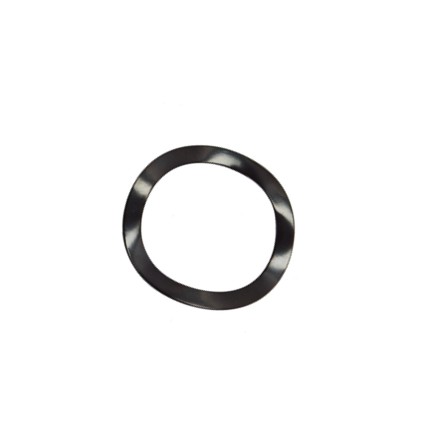
Wave Spring Washers: The Engineered Solution for Compact, High-Load Preloading

Wave spring washers are specialized, wavy-shaped fasteners designed to provide predictable radial and axial force within highly restricted spaces. Unlike traditional coil springs or bulky Belleville washers, wave washers optimize space by reducing operating heights by up to 50% while delivering identical force profiles. This makes them the industry standard for eliminating play, absorbing shock, and maintaining critical tension in modern precision engineering.

   _..---.._     <-- Wavy, undulating profile 
 .-'         '-.     deflects under axial load
(_______________)    to provide constant tension

Strategic Mechanical Advantages

  • Space-Saving Geometry: Operates in compact cavities where standard compression springs physically cannot fit.
  • Compensation for Wear: Automatically absorbs axial slack caused by thermal expansion, component wear, or manufacturing tolerances.
  • Precise Bearing Preload: Applies a smooth, continuous force to ball bearings, drastically reducing operating noise and preventing premature bearing failure.
  • Uniform Force Distribution: Offers 360-degree radial load distribution without the high stress-concentration points common in standard lock washers.

Shop our Wave Spring Washers online:

The Power of 316 Grade Stainless Steel: The Ultimate Marine Grade Alloy

316 grade stainless steel is a premium austenitic alloy renowned for its superior corrosion resistance and exceptional durability. Often referred to as “marine grade” stainless steel, it is the second most common commercial grade after 304.

The Molybdenum Difference

The secret to the high performance of 316 lies in its chemical composition. While it contains standard chromium and nickel, it also incorporates 2% to 3% molybdenum. This crucial addition provides heavily upgraded protection against pitting, crevice corrosion, and industrial chemicals, especially in harsh chloride-heavy environments.

Depending on your project requirements, different sub-grades of 316 optimize for specific environments:

GradeKey FeatureBest Used For
316Standard carbon content (0.08% max)High-strength structural parts
316LLow carbon content (0.03% max)Heavy welding without losing corrosion protection
316HElevated carbon contentHigh-temperature applications like pressure vessels

Practical Applications:

  • Marine Equipment: Boat fittings, coastal architectural fascia, and underwater infrastructure.
  • Chemical & Medical: Pharmaceutical equipment, specialized surgical devices, and processing plants.
  • Food & Beverage: Commercial kitchenware, dairy processing, and brewing systems due to its hygienic, easy-to-clean nature.

We welcome any enquiry you may have for 316 Stainless Steel Non-Threaded Fasteners.

Circlips in Oil & Gas: Engineering for Extreme Environments

In the oil and gas sector, component failure is not an option. Upstream drilling, midstream transport, and downstream processing equipment operate under some of the most hostile conditions on earth. Circlips—also known as retaining rings—play a critical role in these systems by securing bearings, shafts, and assemblies inside valves, pumps, and drilling tools.

When specifying retaining rings for oil and gas applications, standard carbon steel components are rarely sufficient. Engineers must account for extreme pressures, corrosive chemicals, and severe temperature fluctuations.


Key Technical Challenges

  • Corrosion Resistance: Components face constant exposure to sour gas (H₂S), carbon dioxide (CO₂), brine, and seawater. Standard materials suffer from rapid pitting and stress corrosion cracking.
  • High-Pressure, High-Temperature (HPHT): Downhole drilling tools operate at temperatures exceeding 200°C and pressures above 15,000 psi. Retaining rings must maintain their mechanical properties and gripping power without losing temper.
  • Hydrogen Embrittlement: High-strength steels exposed to corrosive environments can absorb hydrogen, leading to sudden, catastrophic brittle failure under tensile stress.

Material Selection Criteria

Material selection is the most critical factor for circlips in oil and gas applications. Standard rings are typically swapped for high-performance alloys:

Material ClassCommon AlloysPrimary BenefitTypical Application
Stainless Steel316 Stainless, 17-7 PHGeneral corrosion resistance and excellent fatigue strength.Surface pumps, valves, and marine topside equipment.
Nickel AlloysInconel X-750, Inconel 718Exceptional strength at high temperatures; resists sour gas.Downhole drilling tools, subsea valves, and completions.
Copper AlloysPhosphor Bronze, Beryllium CopperNon-magnetic and non-sparking properties; low friction.Measurement-while-drilling (MWD) tools and explosive zones.

Here at Caleb Components, we are specialists in sourcing & supplying high quality Circlips in the above materials. Please contact us today with your enquiry.

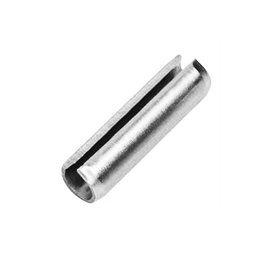
Demystifying Slotted Spring Pins: The Ultimate Mechanical Fastener

Slotted spring pins—often called roll pins—are hollow, cylindrical fasteners with a longitudinal slot running down the entire length. They are engineered to be oversized relative to the hole they fit into, relying on self-retaining spring force to lock securely into place.

Key Functions and Engineering Benefits

  • Self-Locking Design: The pin compresses upon insertion and exerts continuous outward radial force against the hole wall, preventing loosening caused by heavy vibration or shock.
  • Cost-Efficient Production: They eliminate the need for high-precision reamed holes, as they easily accommodate wider hole tolerances than solid dowel pins.
  • Simplified Assembly: Standard chamfered ends create a smooth lead-in angle, allowing rapid installation using a basic hammer, punch, or automated pneumatic press.

Common Industrial Applications

  • Hinges and Pivots: Providing a low-wear, flexible pivot axis for moving mechanical linkages.
  • Gear and Shaft Anchoring: Securing gears, pulleys, or sprockets directly to rotating shafts to transmit light-to-medium torque.
  • Cross-Pinning Fasteners: Acting as a reliable safety lock to prevent larger nuts or components from backing off.

Our Slotted Spring Pins are available to purchase directly online.

Internal Circlips: What They Are and How to Use Them

When securing components inside a mechanical housing, you need a fastening solution that is reliable, space-saving, and capable of handling high rotational forces. Enter the internal circlip—also frequently called an internal retaining ring.

Though small and often hidden from view, these components are vital to the structural integrity of automotive transmissions, electric motors, and heavy machinery.


What is an Internal Circlip?

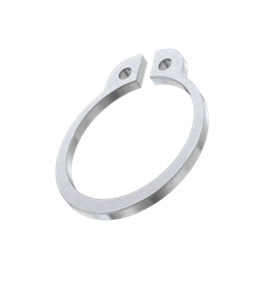
An internal circlip is a semi-flexible, engineered metal ring with an open end. Unlike external circlips, which stretch open to fit over a shaft, internal circlips are designed to be compressed inward. They are installed directly inside a cylinder, bore, or pipe housing.

Once fitted into a specially machined groove inside the bore, the ring snaps outward. This creates a strong, rigid shoulder that prevents bearings, pins, or gears from slipping out horizontally.

       [Housing Wall] 
  _______________________

 |   __  [Groove]  __   |
 |  |  |          |  |  |
 |  |  |==[CLIP]==|  |  | <--- Fits tightly into internal groove
 |  |__|          |__|  |
 |_______________________|

Key Mechanics and Design Features

  • The Lug Holes: Look closely at an internal circlip, and you will notice two small tabs with holes at the open ends. These are lug holes. They allow specialized pliers to grip the ring securely during installation and removal.
  • Sizing Rules: Internal circlips are always categorized and purchased by the nominal bore diameter (the inside diameter of the housing), not the diameter of the groove or the uncompressed ring itself.
  • Tapered Design: The ring’s width decreases from the top center down to the tips. This specific geometry ensures that the circlip maintains a perfectly circular shape when compressed, distributing pressure evenly across the housing groove.

Our Internal Circlips are available to purchase directly online.

How Disc Springs Work

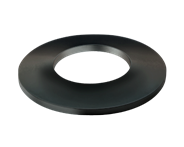
Disc Springs—often called Belleville washers—are conically shaped annular discs that provide a mechanical force when deformed along their axial axis. Unlike standard flat washers, their unique geometry allows them to act as heavy-duty springs in remarkably tight spaces.

1. The Core Mechanics

  • Axial Deflection: When you apply a load to the spring, the cone flattens.
  • Energy Storage: This flattening action stores mechanical energy.
  • High Force: They generate massive resistance with very little movement (deflection).

2. Versatile Stacking Configurations

You can stack disc springs in different ways to radically alter their performance:

  • In Series (Face-to-Face): Stacking them top-to-bottom increases the total deflection (travel distance) while keeping the load capacity the same as a single spring.
  • In Parallel (Nested): Stacking them in the same direction multiplies the load capacity while keeping the deflection the same as a single spring.
  • In Combination: Mixing series and parallel stacks allows engineers to customize both the force and travel distance for specific industrial needs.
   In Series (More Deflection)         In Parallel (More Force)
          ()()()()                             (((())))

3. Key Applications

  • Bolted Joints: Maintaining tension during thermal expansion or contraction.
  • Clutches & Brakes: Providing consistent, heavy damping forces in automotive systems.
  • Valves: Ensuring tight seals under high-pressure conditions.

Our DIN 2093 Disc Springs are available to purchase online:

A2 vs. A4 Stainless Steel: The Crucial Difference

Choosing the wrong grade can lead to premature component failure. Here is how A2 compares to its premium counterpart, A4 (316 grade):

FeatureA2 Stainless Steel (304)A4 Stainless Steel (316)
Chemical Mix18% Chromium, 8% Nickel18% Chromium, 8% Nickel, 2% Molybdenum
EnvironmentInland, automotive, and domestic useMarine, chemical processing, and coastal use
Acid ResistanceModerateHigh (resists chlorides and pitting)
CostBudget-friendlyPremium pricing

Contact us today for a free quotation on A2 and A4 Stainless products.