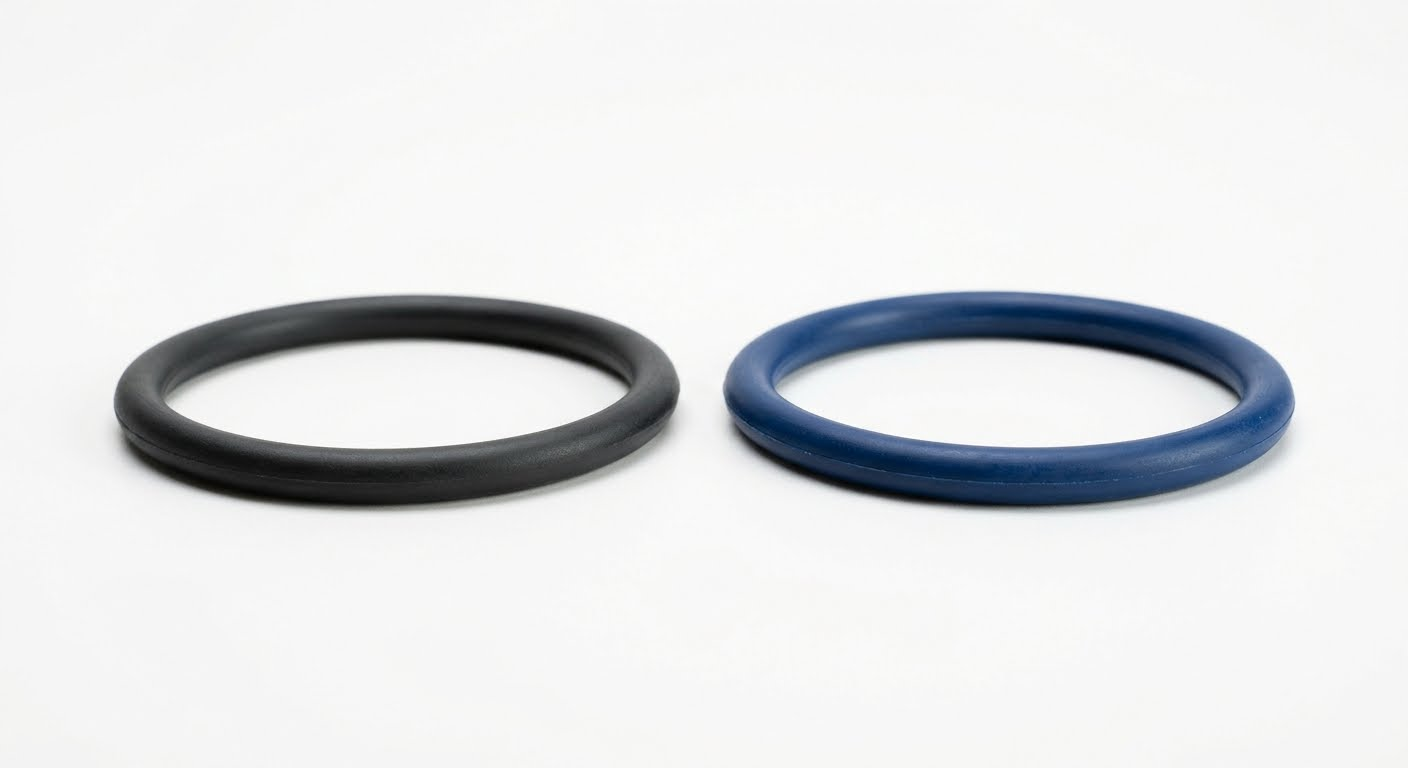
When your sealing application involves hot water, steam, or harsh outdoor weather, EPDM (Ethylene Propylene Diene Monomer) O-rings are often the most reliable and cost-effective choice on the market.
Made from a synthetic rubber terpolymer, EPDM features a saturated chemical backbone that naturally resists breakdown from heat, oxygen, and UV light. Whether you are specifying seals for municipal plumbing or automotive cooling systems, knowing where EPDM shines—and where it fails—is key to preventing leaks.
Key Advantages of EPDM
- Unmatched Water & Steam Resistance: EPDM handles cold water, hot water, and high-pressure steam without swelling or degrading, making it a staple for boilers, heat exchangers, and potable water systems.
- Built for the Outdoors: Unlike standard rubbers that crack when exposed to sunlight or ozone, EPDM maintains its flexibility and seal integrity for years in outdoor environments.
- Wide Temperature Range: Depending on the compound, EPDM typically operates reliably from -40°C to +150°C (with sulfur-cured grades handling up to ~120°C and peroxide-cured grades reaching 150°C).
- Polar Chemical Compatibility: It holds up well against glycol-based brake fluids (DOT 3, DOT 4, DOT 5.1), phosphate-ester hydraulic fluids (like Skydrol®), diluted acids, alkalis, and harsh CIP (clean-in-place) wash-down chemicals.
Common Applications
- Plumbing & Water Treatment: WRAS- and NSF-61-approved peroxide-cured EPDM is the industry standard for drinking water taps, valves, and filtration housings.
- HVAC & Heating: Radiator fittings, hot water lines, and steam valves.
- Automotive: Brake fluid reservoirs, coolant circuits, and weatherstripping.
- Food, Beverage & Pharma: FDA-compliant grades are widely used for aqueous food processing and steam sterilisation.