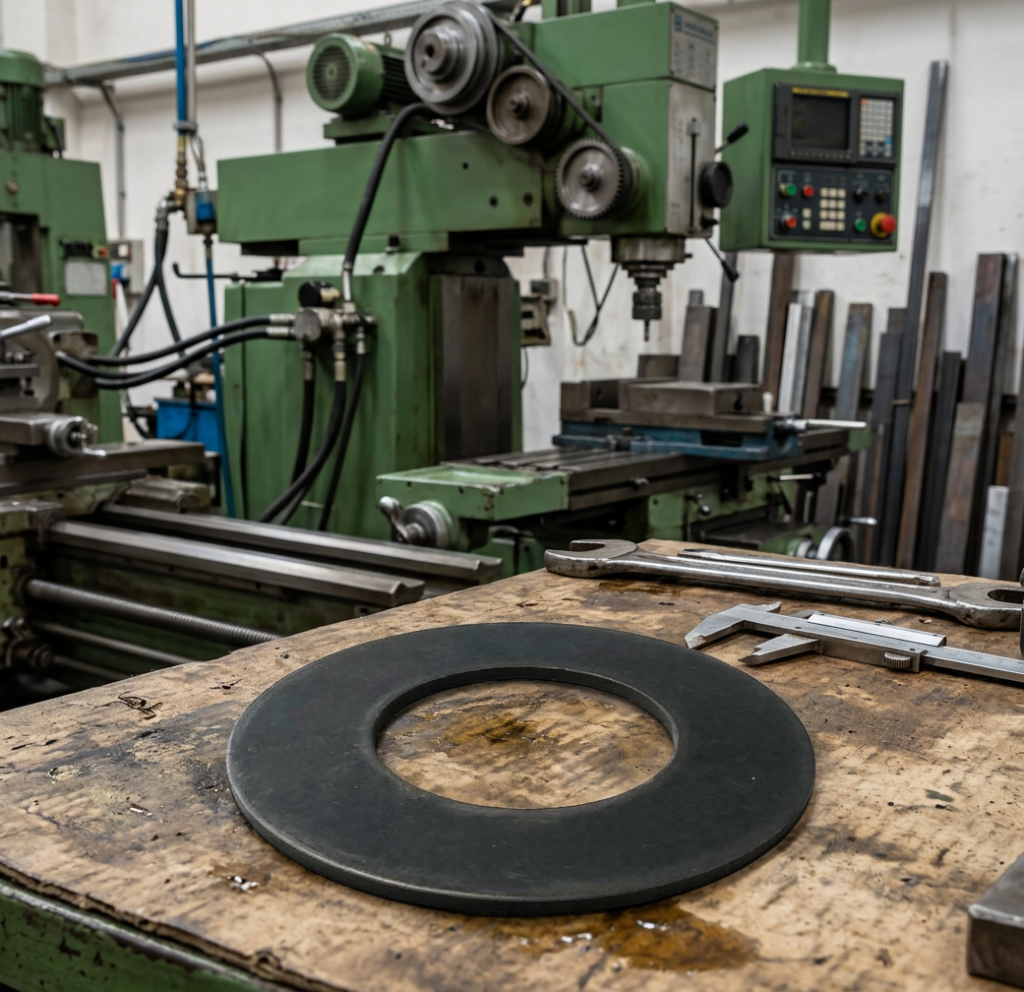
Sourcing disc springs (also known as Belleville washers) requires a precise balance of mechanical engineering knowledge and supply chain strategy. These conically-shaped components are critical for maintaining high tension, absorbing shocks, and compensating for thermal expansion in heavy-duty applications.
Here is a comprehensive guide to successfully sourcing disc springs for your project.
Define Critical Technical Specifications
Before contacting suppliers, you must establish your exact engineering requirements. Sourcing the wrong specification can lead to premature mechanical failure.
- Dimensional Constraints: Document the Outside Diameter (OD), Inside Diameter (ID), material thickness (t), and overall un-loaded height (l₀).
- Force and Deflection: Calculate the exact load required at a specific deflection point. Disc springs behave non-linearly, so your operational window must be clearly defined.
- Stacking Configuration: Determine if you need to stack the springs.
- In Series (face-to-face) increases deflection.
- In Parallel (nested together) increases load capacity.
- Parallel-Series combinations increase both.
Select the Right Material for the Environment
Standard carbon steel is rarely sufficient for specialized industrial applications. Match your material sourcing to the operating environment:
- Standard Applications: Carbon steel (e.g., 51CrV4 or C75S) offers excellent fatigue life for general use.
- Corrosive Environments: Specify Stainless Steel (e.g., 301, 316, or 17-7 PH) for marine or chemical processing.
- High-Temperature Environments: Source exotic alloys like Inconel (718 or X750) or Nimonic if operating temperatures exceed 150°C (300°F).
We are one of the UK’s leading suppliers of standard and bespoke Disc Springs, contact us for a free quotation