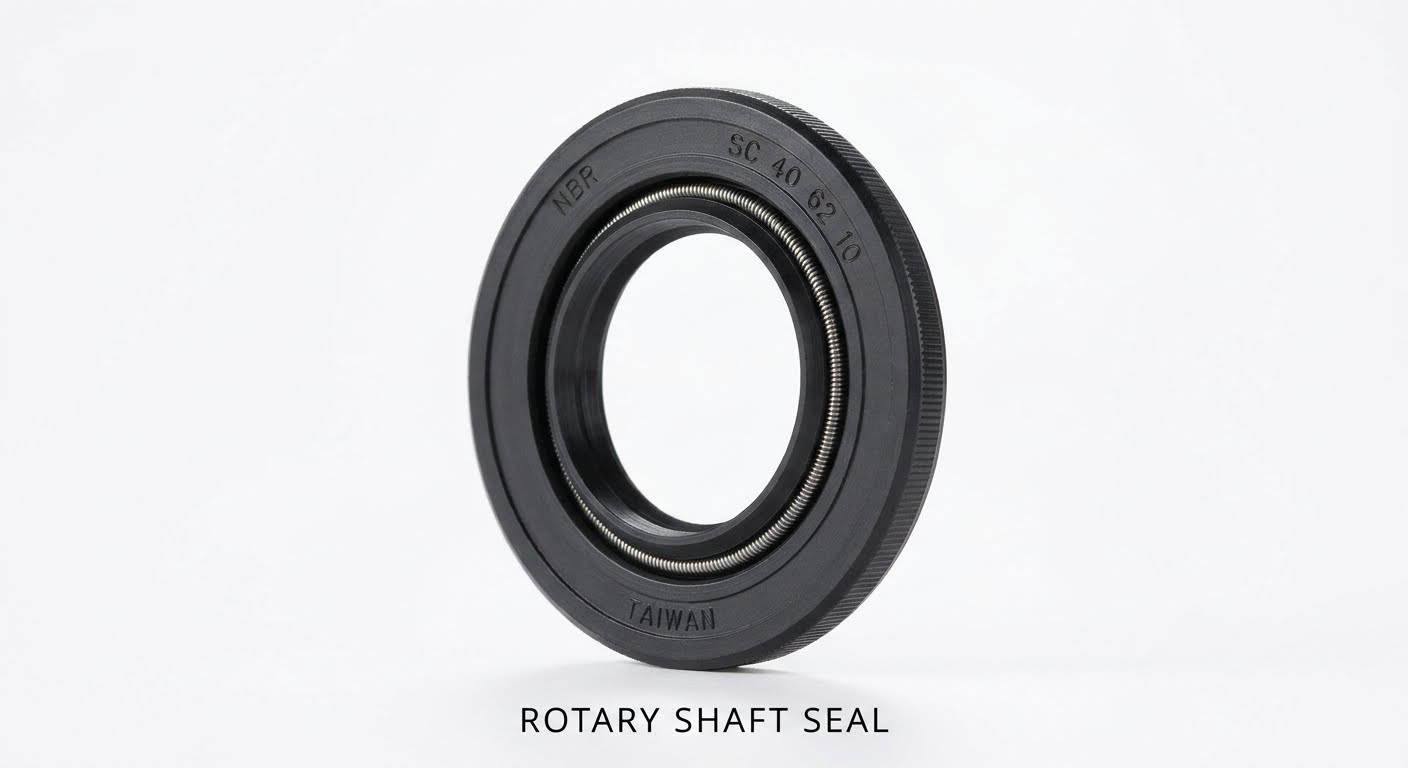
In the world of mechanical engineering, the smallest components often carry the heaviest responsibilities. Rotary shaft seals (frequently called oil seals or radial lip seals) are prime examples. These compact components close the gaps between stationary and rotating parts in mechanical equipment. They perform a crucial dual role: keeping expensive lubricants inside the system and preventing external contaminants like dirt, water, and dust from causing catastrophic wear.
Without this barrier, the components that drive our industries—from gearboxes to electric motors—would suffer rapid degradation and early failure.
Understanding the Standard Core Types
Rotary shaft seals are commonly categorised under standardized designs, notably adhering to DIN 3760 specifications. They are typically grouped into three fundamental construction styles based on their outer diameter (OD) design:
- Type A (Rubber Covered OD): This is the most versatile and widely used standard configuration. The rubber exterior provides excellent sealing capability, even if the housing bore is slightly uneven or has minor scratches. It resists rust and accommodates thermal expansion well.
- Type B (Metal Outer Case): Featuring an exposed metal exterior, Type B seals are pressed directly into the housing bore. They provide a highly precise, tight fit and are more cost-effective. However, they require the housing and seal to share similar thermal expansion coefficients to avoid leaking under sudden temperature swings.
- Type C (Reinforced Metal Case): Similar to Type B, this style adds an internal reinforcing cap. This extra layer provides structural stiffness, making it the ideal selection for heavy-duty conditions or large-diameter machinery.
Material Selection Matrix
Choosing the right elastomer compound dictates how well your seal survives the chemical environment, operating temperature, and shaft speeds:
| Material | Temperature Range | Max Peripheral Speed | Best Suited For | Key Drawbacks |
|---|---|---|---|---|
| Nitrile (NBR) | -30°C to +100°C | Up to 12 m/s | General industrial applications; highly resistant to lubricating oil, grease, and water. | Vulnerable to ozone and aggressive acids or solvents. |
| Viton / Fluorocarbon (FKM) | -20°C to +200°C | Up to 38 m/s | High-temperature applications; excellent resistance to chemicals, acids, and harsh solvents. | Significantly higher material cost compared to NBR. |
Whether you are maintaining an electric motor on a factory floor or designing heavy-duty industrial gearboxes, selecting the correct rotary shaft seal is non-negotiable. Matching the correct case design (Type A, B, or C) with the precise chemical and thermal properties of NBR or FKM ensures maximum component lifespan, lower maintenance costs, and peak machine efficiency.
To request a quote for Rotary Shaft Seals, please contact us here.