
Category Archives: Shakeproof Washers

⚙️The Hidden Lockdown: Why Internal Shakeproof Washers are Essential for High-Vibration Joints

When an assembly is subjected to continuous vibration, standard flat washers often fail to keep components secure. Over time, constant motion leads to rotational loosening, causing fasteners to back out. Internal shakeproof washers—also known as internal tooth lock washers or star washers—provide a highly effective mechanical solution. By utilizing a series of specialized teeth along their inner diameter, these fasteners ensure joints remain locked under intense stress.

How Internal Shakeproof Washers Work

Standard washers focus on distributing load across a surface area. In contrast, shakeproof variants utilize mechanical tension and physical friction to actively bite into mating surfaces.

  • The Bite Mechanism: The teeth along the central hole are slightly twisted or bent. As a bolt or nut is torqued down, these teeth compress and dig into the underside of the fastener head and the mating substrate.
  • Vibration Resistance: When operational vibrations try to turn the bolt counter-clockwise, the twisted teeth resist the movement. They flex and dig deeper into the metal, creating a physical barrier against rotation.

Primary Applications

Because the teeth remain entirely hidden beneath the bolt or screw head, internal shakeproof washers are preferred wherever components require a clean, snag-free finish.

  • Electrical Components: Commonly used in terminal blocks and grounding points to prevent loose connections that could cause electrical arcing.
  • Automotive Interiors & Small Machinery: Ideal for dashboards, brackets, and compact enclosures where space is tight but engine vibrations are constant.
  • Consumer Goods: Found inside household appliances where a neat, professional finish is required.
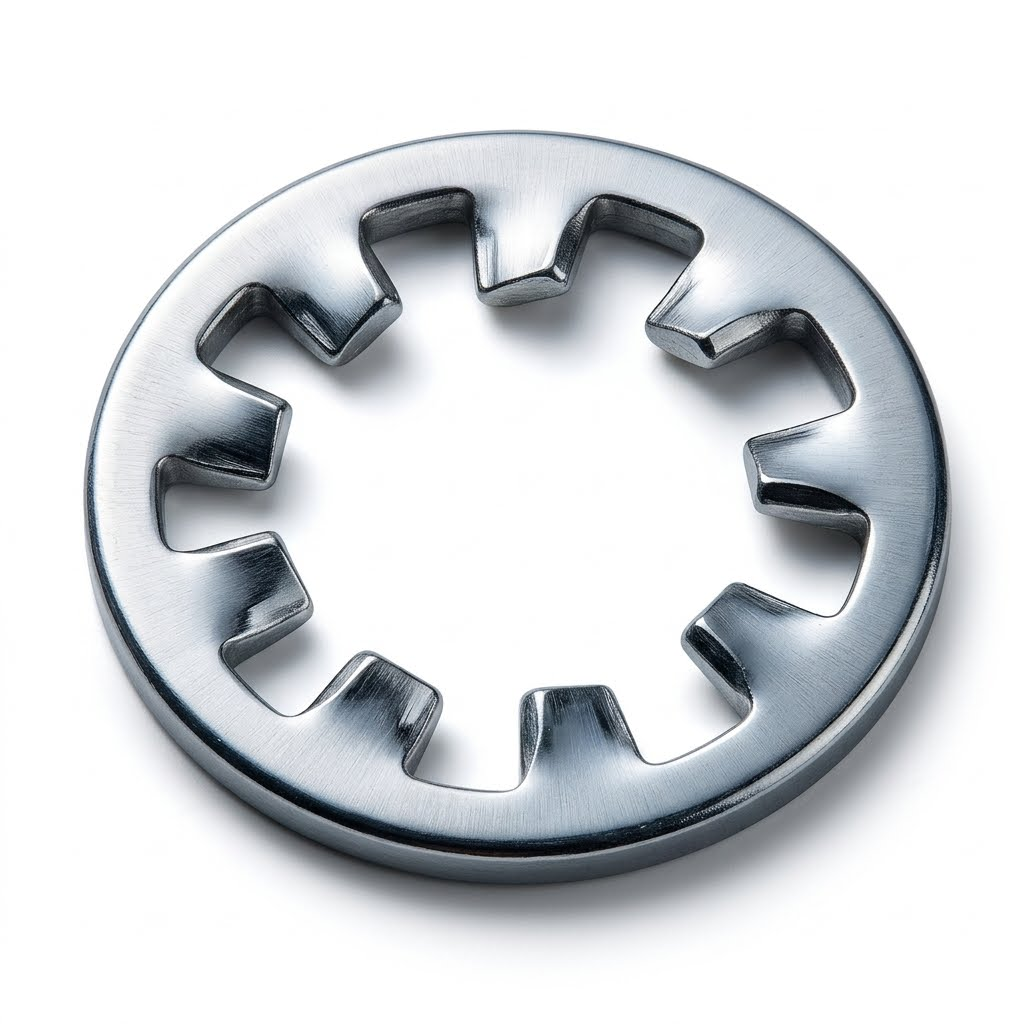
The Hidden Heroes of High-Vibration Engineering: A Guide to Internal Shakeproof Washers

When we think about engineering failures, we often picture massive structural breaks or dramatic engine meltdowns. But more often than not, catastrophic failures start with something incredibly small: a single nut or bolt backing off due to constant vibration.

While standard flat washers are great for distributing weight, they do very little to stop a fastener from spinning free under stress. That is where internal shakeproof washers (often called internal tooth or serrated lock washers) come into play.

Here is a breakdown of how these small components provide maximum security, why their internal design matters, and where they are best utilized.

How Internal Shakeproof Washers Work

Unlike standard hardware, an internal shakeproof washer relies on mechanical tension and physical friction.

  • The Tooth Design: The inner rim of the washer features a series of twisted, sharp prongs or teeth.
  • The Bite: As you tighten a nut or bolt down onto the washer, these teeth flatten under the pressure.
  • The Lock: The spring tension forces the sharp edges of the teeth to bite directly into the underside of the fastener head and the mating surface. If vibrations try to back the bolt out, the angled teeth dig deeper, preventing rotation.

The Ultimate Guide to Shakeproof Washers: Stopping Loose Fasteners for Good

In engineering and manufacturing, vibration is the ultimate silent enemy. From household appliances to high-velocity automotive engines, constant movement creates micro-shifts that can cause standard nuts and bolts to back off and fail.

While a traditional flat washer excels at distributing weight, it does very little to stop a bolt from spinning loose. Enter the shakeproof washer (also known as a tooth lock washer). This specialized component uses mechanical tension and physical barriers to lock fasteners firmly in place.

Here is everything you need to know about how these small components solve massive mechanical issues.


How Do Shakeproof Washers Work?

Unlike a smooth flat washer, a shakeproof washer features a series of sharp, twisted teeth along its edges.

When you tighten a nut or bolt down onto a shakeproof washer, these teeth act like microscopic anchors. The twisted configuration means one edge of the tooth bites directly into the underside of the fastener head, while the opposite edge digs into the mating surface.

This aggressive dual-bite prevents the fastener from turning backwards. Additionally, the minor spring-like tension within the teeth absorbs ongoing vibrations, maintaining structural friction even under heavy workloads.


Internal vs. External: Choosing Your Type

Shakeproof washers generally fall into two primary configurations based on where their teeth are located. Choosing the right one depends heavily on your workspace and cosmetic goals.

Washer TypeTeeth LocationBest Used For…Key Benefit
Internal SerratedInside diameterSmall fastener heads and tight assembly spaces.Provides a clean, hidden finish after tightening.
External SerratedOutside diameterLarger fastener heads and maximum locking power.Teeth bite further away from the axis, offering better torque resistance.

Most shakeproof washers are finished in a bright zinc plating (BZP) for general corrosion resistance.