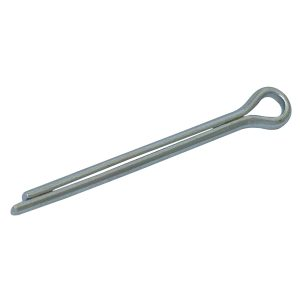
Core Function: How a Split Cotter Pin Works
The genius of the split cotter pin lies in its ease of deployment and reliability. It is typically inserted through a pre-drilled hole in a shaft, bolt, or clevis pin. Once pushed through, its flexible tines are pried apart and bent backward. This mechanical deformation locks the pin permanently in place until it is intentionally cut or removed.
⚠️ Safety Critical Note: Split cotter pins are designed for single-use applications. Bending the tines fatigues the metal. Reusing a cotter pin significantly increases the risk of shearing or cracking under stress. Always replace them with new pins during maintenance.
Top 4 Industrial and Commercial Applications
1. Automotive and Aerospace (Chassis & Drivetrains)
The transport sector relies heavily on cotter pins to lock high-vibration joints.
- Castellated Nuts on Wheel Hubs: The most recognizable application is on a car’s front wheel spindle. A cotter pin passes through the spindle axle and sits nestled in the slots of a castellated (or slotted) nut, ensuring your wheel assembly stays attached.
- Steering Linkages & Tie Rods: Steering components face constant oscillation and road shock. Cotter pins guarantee that ball joints and tie rods remain connected even if a nut loses its torque.
2. Heavy Machinery and Construction Equipment
From excavators to agricultural tractors, heavy-duty machinery operates under extreme loads where a single loose bolt can cause catastrophic downtime.
- Clevis Pins in Hydraulic Cylinders: Hydraulic arms use thick clevis pins to pivot. A heavy-duty cotter pin through the end of the clevis pin keeps the pivot locked.
- Vibrating Screen Decks & Crushers: Equipment that intentionally vibrates to process materials uses cotter pins as fail-safes on structural fasteners.
3. Marine and Maritime Hardware
Boats and offshore rigs are subjected to both continuous wave motion and highly corrosive saltwater.
- Sailboat Rigging: Turnbuckles, shackles, and clevis pins on sailboats use stainless steel cotter pins to secure masts and lines under heavy wind loads.
- Propeller Shafts: Boat props are secured to the drive shaft using slotted nuts backed up by a marine-grade cotter pin to prevent the propeller from spinning off when reversing.
4. Material Handling and Consumer Goods
You can find split cotter pins hidden in everyday infrastructure and equipment.
- Forklifts & Cranes: Hoisting chains and anchor shackles are tightly secured using cotter-pinned linkages.
- Scaffolding Towers: Modular scaffolding frames use locking pins held in place by cotter pins to ensure platforms do not collapse under worker weight.