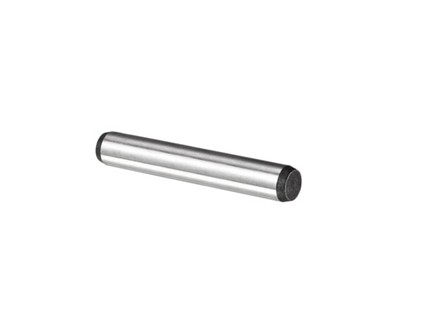
Lock in absolute precision with DIN 6325 Solid Dowel Pins—engineered for exact alignment, extreme durability, and high breaking strength. When your industrial components require an unyielding, high-accuracy interface, trust the industry-standard through-hardened parallel pin built to handle high vibration, shock, and fatigue.
Why Engineers Choose Our DIN 6325 Dowels:
Precision Engineered: Ground to strict m6 interference-fit tolerances for a flawless, secure location between components.
Maximum Hardness: Through-hardened to 58–62 HRC (100Cr6 steel), preventing deformation under heavy loads.
Seamless Installation: Features a smart dome and chamfer profile (radius end) that prevents scoring and allows for effortless alignment during assembly.
Ready to upgrade your assembly’s reliability? Get a fast quote on premium DIN 6325 Dowel Pins. Contact our engineering sales team today or browse our full sizing catalogue online!
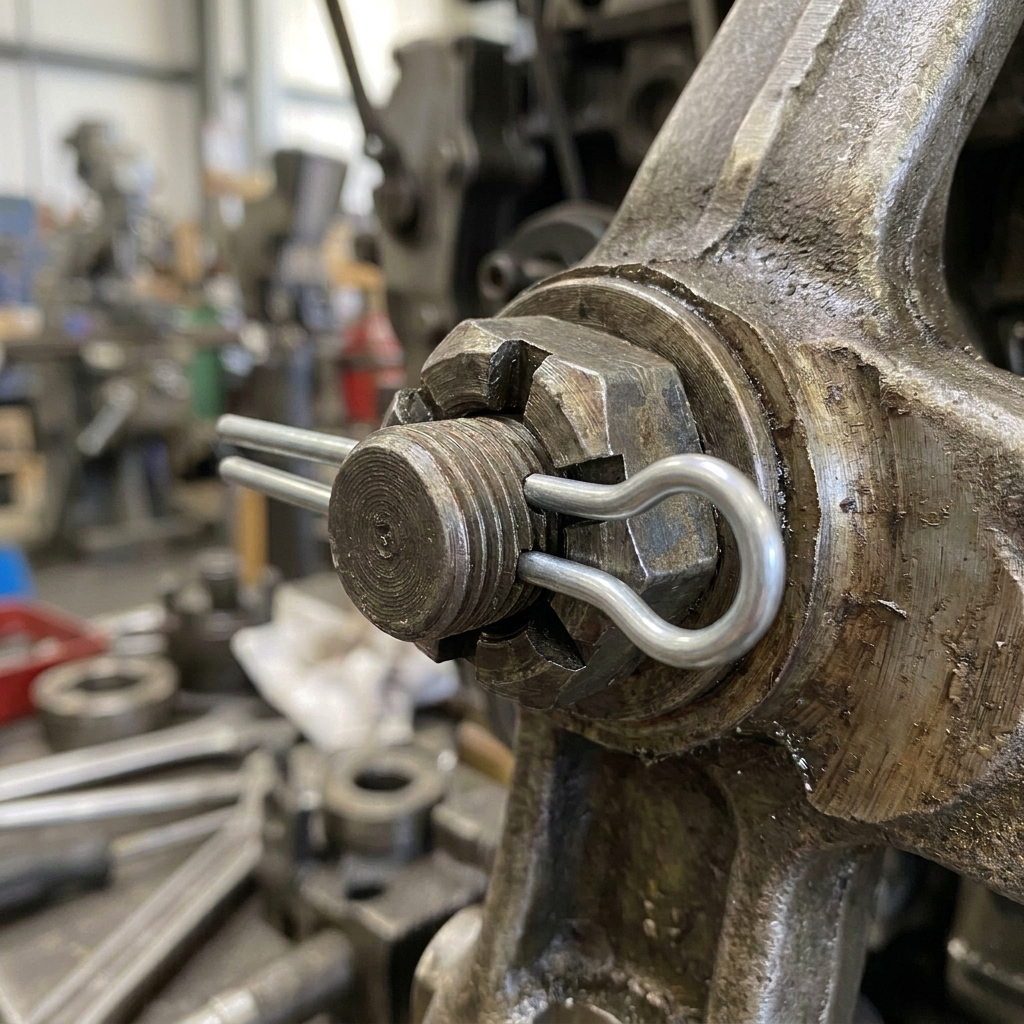
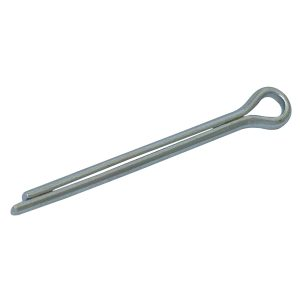
When heavy machinery, automotive components, or industrial equipment are on the line, you cannot afford to let a single nut or bolt vibrate loose. Prevent mechanical failure before it starts with our industrial-grade Split Cotter Pins.
Engineered for maximum reliability and effortless installation, these pins provide the ultimate mechanical lock for clevis pins, slotted nuts, and retaining systems.
Why Engineers and Mechanics Choose Our Cotter Pins:
Uncompromising Strength: Manufactured from high-tensile steel, stainless steel, and brass to withstand intense shear forces and harsh environments.
Corrosion Resistance: Available with premium zinc plating to fight off rust, moisture, and chemical exposure, ensuring a long operational lifespan.
Flawless Installation: Features an extended prong design (one leg slightly longer than the other) for quick, hassle-free insertion and easy bending.
Universal Compatibility: Available in a vast range of standard metric and imperial sizes—from micro-machinery applications to heavy-duty agricultural equipment.
Whether you are performing routine fleet maintenance, assembling aerospace components, or working on a weekend automotive restoration, ensure your fasteners stay locked in place.
Keep it together. Keep it safe. Choose our Split Cotter Pins.
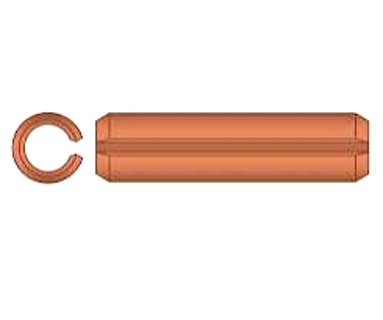
Are standard steel Roll Pins (Spring Pins or Sellock Pins) ruining your high-performance designs? Whether you are battling severe marine corrosion, magnetic interference, or catastrophic galling in moving parts, ordinary fasteners just don’t cut it. You need a spring pin engineered to survive where others fail.
Introducing our premium Phosphor Bronze Roll Pins—the ultimate heavy-duty fastening solution for elite engineering.
Why Engineered Assemblies Choose Phosphor Bronze:
Zero Rust, Total Corrosion Resistance: Impervious to saltwater, freshwater, and harsh chemicals. Perfect for marine hardware, offshore equipment, and outdoor installations.
100% Non-Magnetic: Ideal for sensitive aerospace avionics, medical imaging machinery, and advanced electronics where magnetic fields destroy accuracy.
High Conductivity: A copper-based alloy that pulls double duty, providing a rock-solid mechanical joint while serving as a reliable electrical grounding path.
Anti-Galling & Low Friction: Naturally self-lubricating against harder metals, eliminating the risk of binding, seizing, or wear on high-cycle pivot points and hinges.
Maximum Spring Retention: Infused with phosphorus for elite elasticity, ensuring a permanent, high-friction grip that refuses to back out under intense vibration.
Built for Demanding Industries:
From aerospace cockpits and marine rigging to industrial switchgear and automated assembly lines, our Phosphor Bronze Roll Pins provide the permanent, self-retaining hold your reputation relies on.
The genius of the split cotter pin lies in its ease of deployment and reliability. It is typically inserted through a pre-drilled hole in a shaft, bolt, or clevis pin. Once pushed through, its flexible tines are pried apart and bent backward. This mechanical deformation locks the pin permanently in place until it is intentionally cut or removed.
⚠️ Safety Critical Note: Split cotter pins are designed for single-use applications. Bending the tines fatigues the metal. Reusing a cotter pin significantly increases the risk of shearing or cracking under stress. Always replace them with new pins during maintenance.
Top 4 Industrial and Commercial Applications
1. Automotive and Aerospace (Chassis & Drivetrains)
The transport sector relies heavily on cotter pins to lock high-vibration joints.
Castellated Nuts on Wheel Hubs: The most recognizable application is on a car’s front wheel spindle. A cotter pin passes through the spindle axle and sits nestled in the slots of a castellated (or slotted) nut, ensuring your wheel assembly stays attached.
Steering Linkages & Tie Rods: Steering components face constant oscillation and road shock. Cotter pins guarantee that ball joints and tie rods remain connected even if a nut loses its torque.
2. Heavy Machinery and Construction Equipment
From excavators to agricultural tractors, heavy-duty machinery operates under extreme loads where a single loose bolt can cause catastrophic downtime.
Clevis Pins in Hydraulic Cylinders: Hydraulic arms use thick clevis pins to pivot. A heavy-duty cotter pin through the end of the clevis pin keeps the pivot locked.
Vibrating Screen Decks & Crushers: Equipment that intentionally vibrates to process materials uses cotter pins as fail-safes on structural fasteners.
3. Marine and Maritime Hardware
Boats and offshore rigs are subjected to both continuous wave motion and highly corrosive saltwater.
Sailboat Rigging: Turnbuckles, shackles, and clevis pins on sailboats use stainless steel cotter pins to secure masts and lines under heavy wind loads.
Propeller Shafts: Boat props are secured to the drive shaft using slotted nuts backed up by a marine-grade cotter pin to prevent the propeller from spinning off when reversing.
4. Material Handling and Consumer Goods
You can find split cotter pins hidden in everyday infrastructure and equipment.
Forklifts & Cranes: Hoisting chains and anchor shackles are tightly secured using cotter-pinned linkages.
Scaffolding Towers: Modular scaffolding frames use locking pins held in place by cotter pins to ensure platforms do not collapse under worker weight.
To install a spring tension pin (also known as a roll pin or coiled pin), you must align the host holes precisely and drive the oversized pin in using a dedicated roll pin punch and a hammer. Because spring pins are manufactured slightly larger than the hole, they compress upon entry to create a permanent, vibration-resistant interference fit
Essential Tools
Roll pin punches: Unlike standard flat punches, these feature a small center pilot ball or nub that keeps the punch centered and prevents the hollow pin from collapsing or flaring.
Ball-peen hammer or mallet: Used for driving the punch.
Vise grips or pliers: Highly useful for gripping and stabilizing small pins during the initial start.
Lubricant (Optional): A drop of light oil can ease insertion into tight metal holes.
Step-by-Step Installation Guide
   Roll Pin Punch (With Pilot Ball)
         [======]
           |||  <-- Pilot ball fits inside the pin
          [===]

          |   | <-- Spring Tension Pin (Oversized)
          |___|
         _______
      ===|     |=== <-- Aligned Host Components

         |_____|
1. Confirm Pin Sizing
Always select a pin matching the nominal size of your drilled hole. For instance, a 5mm spring pin is explicitly intended for a 5mm hole, though its uncompressed resting diameter will measure slightly larger.
2. Align the Components
Thoroughly align the holes of the internal shaft and external housing. If the components are misaligned, the pin will bind, bend, or score the inside of the hole. Use a regular punch or alignment tool to temporarily hold them in position if necessary.
3. Start the Pin
Place the chamfered (tapered) end of the pin into the hole.
Pro Tip for Small Pins: Small pins are notorious for flipping or dropping. Use a pair of vise grips or locking pliers to lightly pinch the pin near its insertion tip. This lets you hold the pin steady without risking your fingers.
4. Drive the Pin Home
Place your roll pin punch squarely over the exposed end of the pin. Deliver light, controlled, and perfectly straight hammer strikes. Keep driving the pin inward until it sits flush with—or is centered equally within—the host material
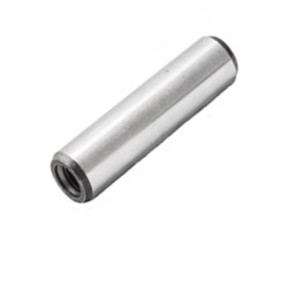
Extractable dowel pins (also known as pull dowel pins) are specialized, precision-ground fasteners used to accurately align, position, and hold machine components together while allowing for easy removal from blind holes. Unlike standard dowel pins, which require an exit hole to be punched out from behind, extractable dowel pins feature an internal thread. This internal thread allows engineers to easily pull the pin out from the front using a matching screw or a specialized slide-hammer extraction tool.
How Extractable Dowel Pins Work
Standard dowel pins work beautifully in through-holes. However, when a dowel pin is pressed into a blind hole (a hole that does not go all the way through the material), removing it later becomes a destructive and frustrating nightmare.
Extractable dowel pins solve this specific issue through a simple design:
Internal Threading: The core of the pin is tapped with a standard metric or imperial internal thread.
Air Vent Flat: Most pull dowels feature a small ground flat side or an axial vent groove. This prevents air pressure from trapping the pin inside a blind hole during installation or removal.
Tapered Options: Some extractable dowels feature a slight taper, making them even easier to release from heavy-duty industrial machinery.
To extract the pin, a technician simply threads a bolt, threaded rod, or slide-hammer tool into the top of the pin and pulls it straight out without damaging the surrounding mating surfaces.
Key Benefits in Industrial Applications
Implementing extractable dowel pins over standard fasteners offers three primary advantages:
Effortless Maintenance: They completely eliminate the need for drilling out stuck pins, reducing machinery downtime from hours to seconds.
Component Protection: Because removal forces are applied inline via the thread, the surrounding precision-machined holes are protected from scratches, warping, or widening.
Infinite Reusability: Manufactured from hardened alloy steel or stainless steel, these pins can be inserted, extracted, and reused across hundreds of maintenance cycles
Technical Specifications to Consider
When sourcing extractable dowel pins for a project, pay close attention to these critical dimensions:
Nominal Diameter & Tolerance: Usually ground to precise tolerances (such as m6 or h6) to ensure an interference fit or tight clearance fit.
Thread Size: Standard sizing dictating the pull tool needed (e.g., an M6 diameter pin might feature an M3 or M4 internal thread).
Hardness Rating: Typically hardened to HRC 58-62 to ensure the extraction threads do not strip out under high pulling forces.
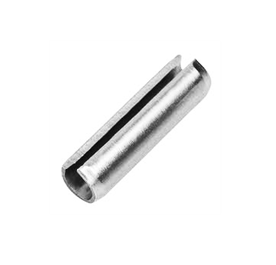
Slotted spring pins—often called roll pins—are hollow, cylindrical fasteners with a longitudinal slot running down the entire length. They are engineered to be oversized relative to the hole they fit into, relying on self-retaining spring force to lock securely into place.
Key Functions and Engineering Benefits
Self-Locking Design: The pin compresses upon insertion and exerts continuous outward radial force against the hole wall, preventing loosening caused by heavy vibration or shock.
Cost-Efficient Production: They eliminate the need for high-precision reamed holes, as they easily accommodate wider hole tolerances than solid dowel pins.
Simplified Assembly: Standard chamfered ends create a smooth lead-in angle, allowing rapid installation using a basic hammer, punch, or automated pneumatic press.
Common Industrial Applications
Hinges and Pivots: Providing a low-wear, flexible pivot axis for moving mechanical linkages.
Gear and Shaft Anchoring: Securing gears, pulleys, or sprockets directly to rotating shafts to transmit light-to-medium torque.
Cross-Pinning Fasteners: Acting as a reliable safety lock to prevent larger nuts or components from backing off.
Our Slotted Spring Pins are available to purchase directly online.
Imagine you are servicing a heavy stamping die or an injection mold. The alignment pins are pressed into a “blind hole”—a hole that does not drill all the way through the part.
If you use a standard solid pin, there is no way to tap it out from the reverse side. Technicians are often forced to weld a nut to the top of the pin or attempt to drill it out. This ruins the pin, risks damaging the expensive surrounding component, and wastes valuable production time.
Extractable pins completely eliminate this issue, offering three massive benefits:
Zero Component Damage: You pull the pin cleanly without marring the workpiece.
Rapid Maintenance: Molds, fixtures, and dies can be stripped down and rebuilt in a fraction of the time.
Repeatable Accuracy: Because the removal process is non-destructive, the integrity of the reamed hole is preserved for future assemblies.
How to extract them: Step-by-Step
Removing these pins requires the right mechanical leverage. Never use pliers or vice grips, as they will score the precision-ground exterior.
Clear the Thread: Ensure the internal thread is free of debris, grease, or metal shavings.
Engage the Tool: Thread a matching pull-bolt, a mechanical puller sleeve, or a specialized slide hammer into the pin.
Apply Axial Force: Use the tool to apply a straight, perpendicular upward force. The slide hammer will pop the pin out cleanly, even if it is a heavy press-fit.
Where can I buy Extractable Dowel Pins?
There are available to buy directly through our online store:
Solid Dowel Pins (DIN 6325) are generally used to offer a secure and accurate location between two components. These Pins are through hardened and ground to m6 tolerance.
Here at Caleb Components, we stock a fantastic range of Solid Dowel Pins, available for same day shipping.