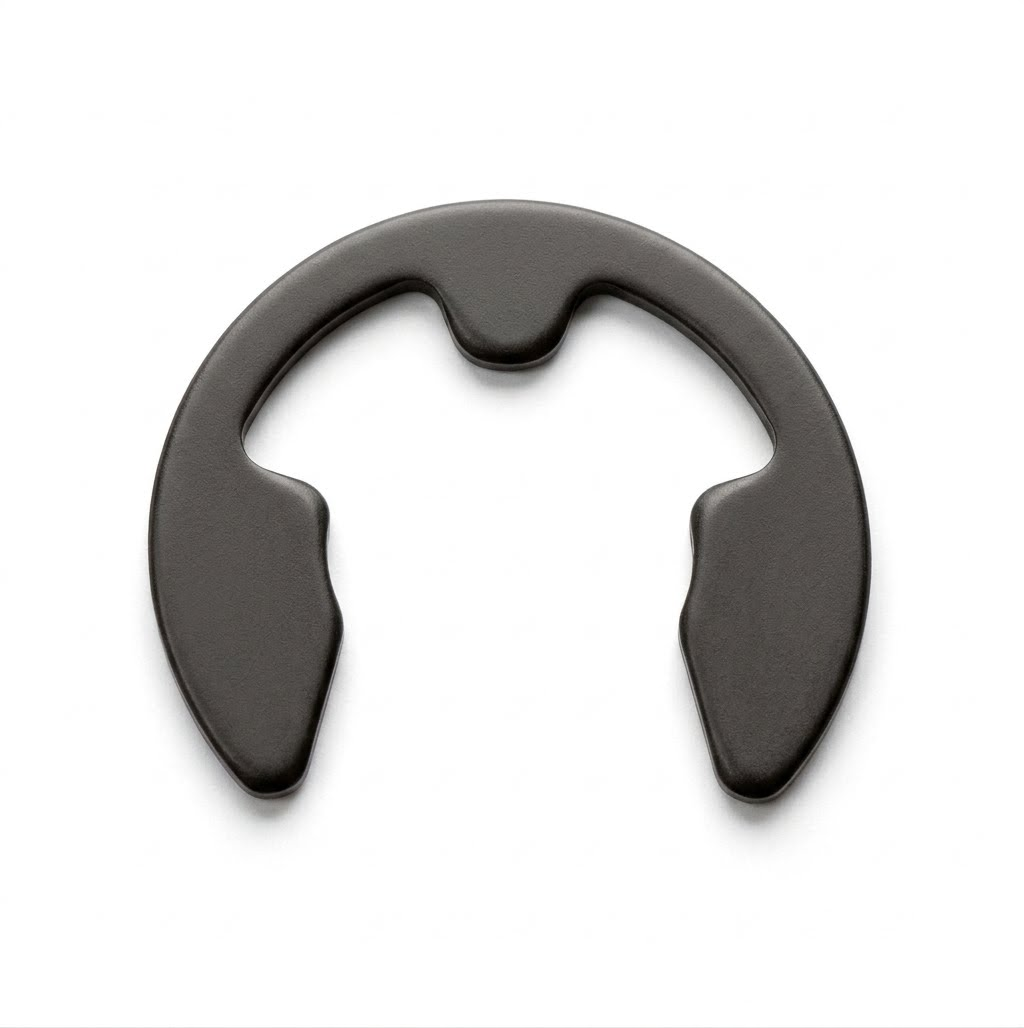
One of the most common mistakes when ordering E-clips is measuring the outer diameter of the shaft instead of the groove. A metric DIN 6799 E-clip is always sized by the groove diameter (d₂) it clips onto.
For example, a 4 mm E-clip is designed to snap into a 4 mm machined groove, which is typically cut into a shaft measuring between 5 mm and 7 mm in diameter.
| Nominal Size / Groove Ø (mm) | Fits Shaft Ø Range (mm) | Clip Outer Ø (mm) | Clip Thickness (mm) |
|---|---|---|---|
| 1.5 | 2.0 – 2.5 | 4.0 | 0.4 |
| 2.3 | 3.0 – 4.0 | 6.0 | 0.6 |
| 3.2 | 4.0 – 5.0 | 7.0 | 0.6 |
| 4.0 | 5.0 – 7.0 | 9.0 | 0.7 |
| 5.0 | 6.0 – 8.0 | 11.0 | 0.7 |
| 6.0 | 7.0 – 9.0 | 12.0 | 0.7 |
| 8.0 | 9.0 – 12.0 | 16.0 | 1.0 |
| 10.0 | 11.0 – 15.0 | 20.0 | 1.2 |
| 12.0 | 13.0 – 18.0 | 23.0 | 1.3 |
| 15.0 | 16.0 – 24.0 | 29.0 | 1.5 |
Installation and Maintenance Best Practices:
To get the longest service life out of your retaining rings, keep these practical tips in mind:
- Check Clearance: Because E-clips protrude further outward than standard circlips, verify that the clip’s outer diameter will not foul against nearby housing walls or adjacent gears.
- Install Squarely: Align the three prongs squarely with the clean, burr-free groove and press straight in. Twisting the clip during installation can permanently deform the spring steel.
- Never Reuse Over-Stretched Clips: An E-clip relies on spring tension to stay seated. If you pry an E-clip off during repairs—always levering from the open side, never the closed back—replace it with a fresh clip to prevent it from spinning loose under load.