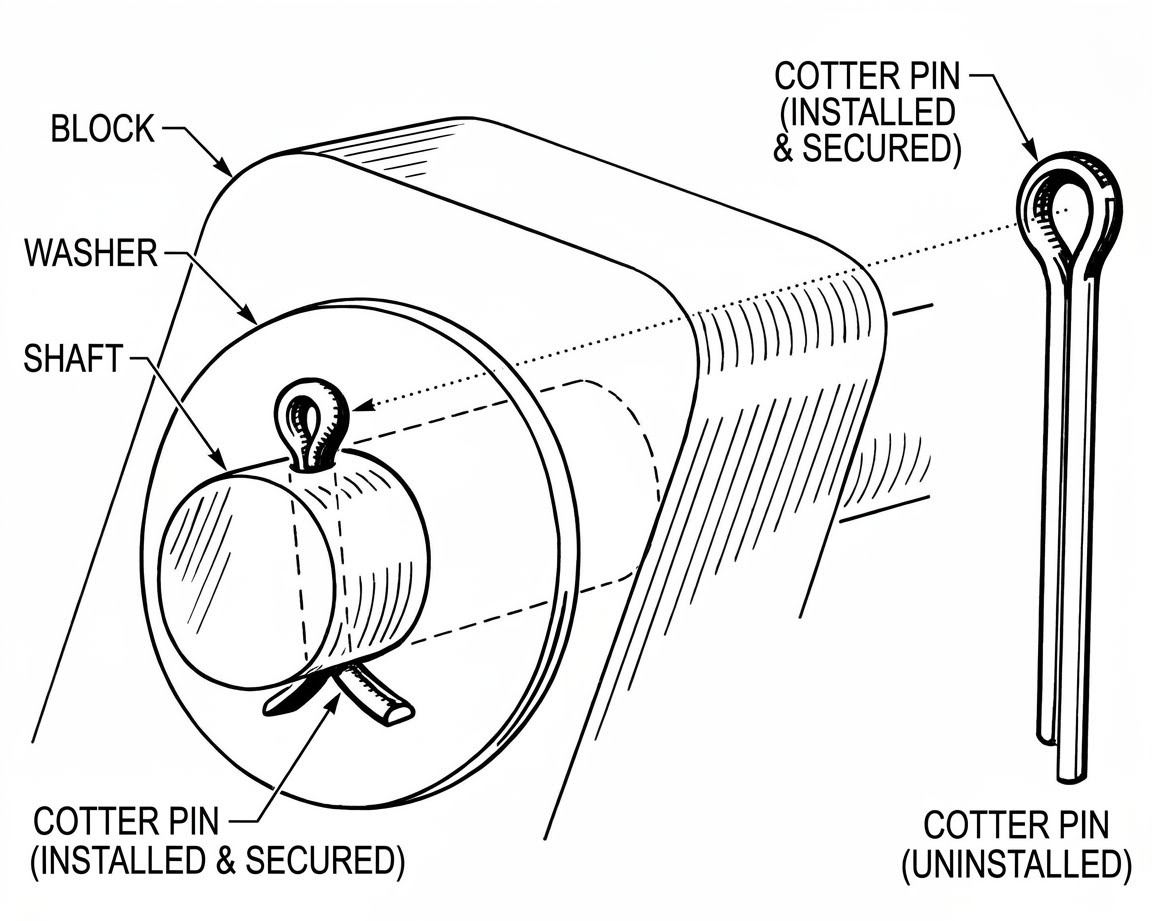
Split cotter pins, also known simply as split pins, are vital locking mechanisms used across the rail industry to prevent critical nuts, clevis pins, and pivot assemblies from loosening due to intense vibration and thermal cycling. They are commonly installed alongside castle nuts on braking systems, bogies, switchgear, and track maintenance machinery to guarantee a mechanical fail-safe.
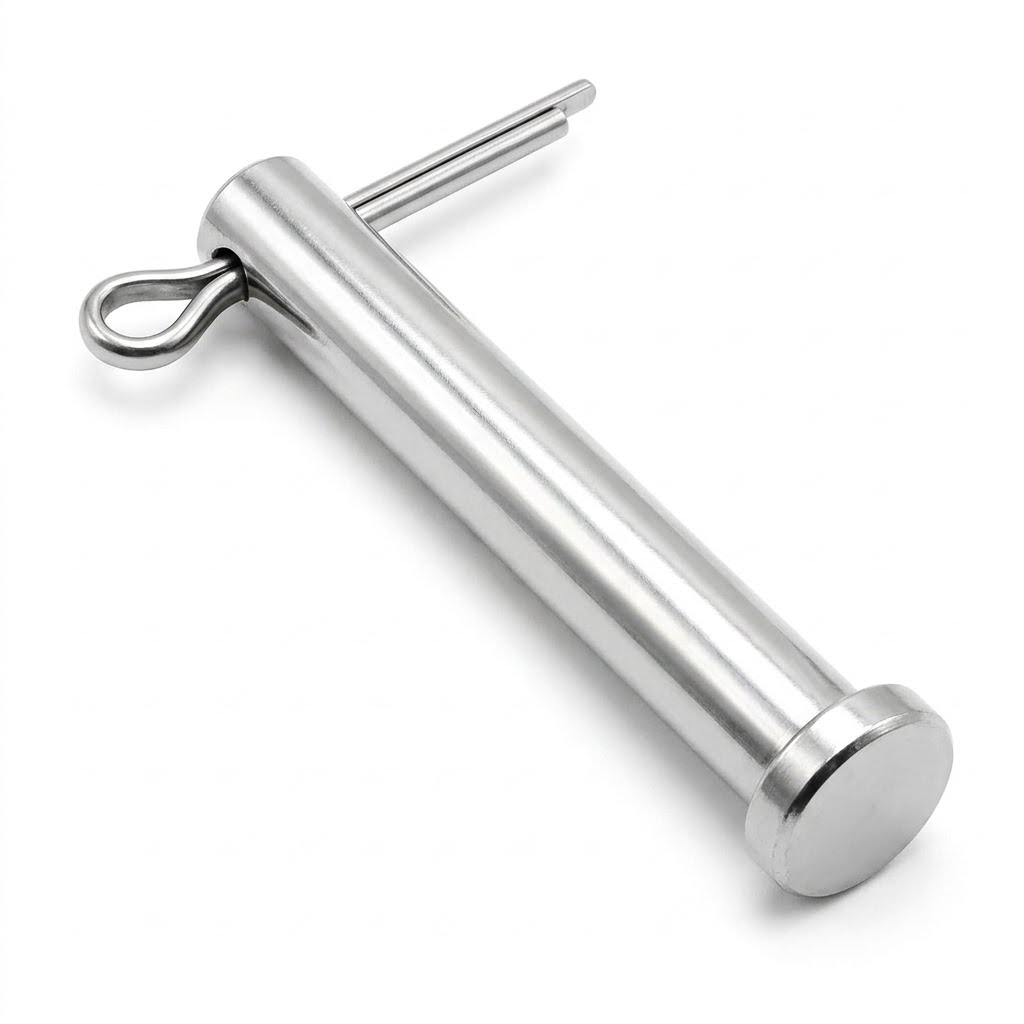
Because split pins experience severe bending fatigue during installation, they must always be treated as a single-use consumable and replaced during every track or rolling stock maintenance cycle to avoid catastrophic stress failures.
How to install a Split Cotter Pin:
- Align the Components: If you are securing a castle nut, tighten it to its required torque specification. Ensure one of the slots (castellations) on the nut lines up perfectly with the pre-drilled hole in the bolt or shaft.
- Select the Right Pin Size: Choose a pin with a diameter that closely matches the hole. A loose pin can vibrate and fatigue prematurely, while a pin that is too tight will have its protective coating scratched off during insertion.
- Insert the Pin: Push the straight legs of the cotter pin into the hole, leading with the prongs. Push it all the way through until the circular loop (the eye/head) of the pin rests snugly against the edge of the hole or the slot of the castle nut.
- Bend the Prongs (The Locking Mechanism):
- Use a pair of pliers to separate the two exposed legs on the exit side of the hole.
- Bend the legs in opposite directions around the nut or shaft to lock it firmly in place.
The Two Standard Bending Methods
Depending on the workspace, component type, and industry standards, maintenance technicians use one of two main methods to secure the prongs:
| Bending Style | How It’s Done | Best Used For |
|---|---|---|
| Traditional Standard Bend | Pull one leg straight up and bend it flat over the top of the bolt/shaft. Pull the second leg straight down and bend it flat against the side of the nut. | General industrial applications and heavy machinery where side clearance is tight. |
| Butterfly Wrap (Side Bend) | Separate the legs and bend both of them outward and backward around the sides of the nut or shaft. | Standard clevis pins and open linkages where the top of the pin must remain completely flat. |