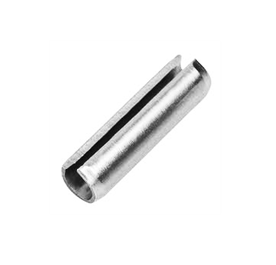
Spring pins—also known as roll pins, tension pins —work by leveraging outward radial tension to lock themselves securely inside a hole without the need for threads. Unlike traditional solid dowel pins that require precision-reamed holes, spring pins are manufactured to be slightly oversized relative to the target hole. When driven into a smaller space, their hollow, elastic construction compresses, trapping mechanical energy and creating a continuous interference fit that resists heavy shocks and vibration.
⚙️ The Core Mechanics: How It Works
The magic of a spring pin comes down to basic physics: radial force and friction.
- The Oversized Design: A spring pin’s resting outside diameter is intentionally larger than the hole it is meant to fit into. Both ends feature chamfers (bevelled edges) to help guide and center the pin into the opening.
- Radial Compression: As you drive the pin into the hole using a hammer or press, the pin’s elastic metal structure is forced to compress inward.
- Stored Potential Energy: Because the metal wants to return to its original, wider shape, the compressed pin exerts a continuous outward radial pressure against the walls of the host hole.
- Frictional Lock: This unrelenting outward force generates immense friction between the pin’s outer surface and the hole walls, establishing a self-retaining joint that won’t wiggle loose under dynamic loads.
🧰 Quick Installation Tips
To ensure a spring pin functions perfectly, keep these installation rules in mind:
- Match the Hole Size: Never drill the hole larger than the nominal diameter of the pin. For a 1/4-inch pin, drill a standard 1/4-inch hole—the pin’s natural elasticity takes care of the tight fit.
- Use the Right Punch: For slotted pins, always use a specialized roll pin punch. These feature a small pilot point in the center of the tip that sits inside the hollow pin, preventing the punch from slipping off and damaging your workpiece.