The Power of 316 Grade Stainless Steel: The Ultimate Marine Grade Alloy

316 grade stainless steel is a premium austenitic alloy renowned for its superior corrosion resistance and exceptional durability. Often referred to as “marine grade” stainless steel, it is the second most common commercial grade after 304.

The Molybdenum Difference

The secret to the high performance of 316 lies in its chemical composition. While it contains standard chromium and nickel, it also incorporates 2% to 3% molybdenum. This crucial addition provides heavily upgraded protection against pitting, crevice corrosion, and industrial chemicals, especially in harsh chloride-heavy environments.

Depending on your project requirements, different sub-grades of 316 optimize for specific environments:

GradeKey FeatureBest Used For
316Standard carbon content (0.08% max)High-strength structural parts
316LLow carbon content (0.03% max)Heavy welding without losing corrosion protection
316HElevated carbon contentHigh-temperature applications like pressure vessels

Practical Applications:

  • Marine Equipment: Boat fittings, coastal architectural fascia, and underwater infrastructure.
  • Chemical & Medical: Pharmaceutical equipment, specialized surgical devices, and processing plants.
  • Food & Beverage: Commercial kitchenware, dairy processing, and brewing systems due to its hygienic, easy-to-clean nature.

We welcome any enquiry you may have for 316 Stainless Steel Non-Threaded Fasteners.

Circlips in Oil & Gas: Engineering for Extreme Environments

In the oil and gas sector, component failure is not an option. Upstream drilling, midstream transport, and downstream processing equipment operate under some of the most hostile conditions on earth. Circlips—also known as retaining rings—play a critical role in these systems by securing bearings, shafts, and assemblies inside valves, pumps, and drilling tools.

When specifying retaining rings for oil and gas applications, standard carbon steel components are rarely sufficient. Engineers must account for extreme pressures, corrosive chemicals, and severe temperature fluctuations.


Key Technical Challenges

  • Corrosion Resistance: Components face constant exposure to sour gas (H₂S), carbon dioxide (CO₂), brine, and seawater. Standard materials suffer from rapid pitting and stress corrosion cracking.
  • High-Pressure, High-Temperature (HPHT): Downhole drilling tools operate at temperatures exceeding 200°C and pressures above 15,000 psi. Retaining rings must maintain their mechanical properties and gripping power without losing temper.
  • Hydrogen Embrittlement: High-strength steels exposed to corrosive environments can absorb hydrogen, leading to sudden, catastrophic brittle failure under tensile stress.

Material Selection Criteria

Material selection is the most critical factor for circlips in oil and gas applications. Standard rings are typically swapped for high-performance alloys:

Material ClassCommon AlloysPrimary BenefitTypical Application
Stainless Steel316 Stainless, 17-7 PHGeneral corrosion resistance and excellent fatigue strength.Surface pumps, valves, and marine topside equipment.
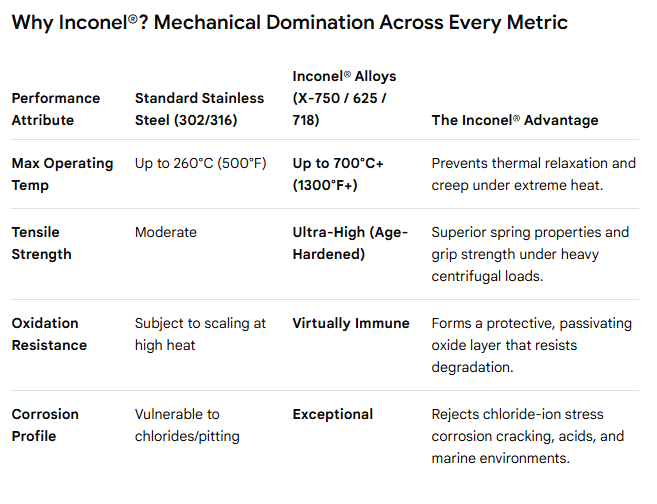
Nickel AlloysInconel X-750, Inconel 718Exceptional strength at high temperatures; resists sour gas.Downhole drilling tools, subsea valves, and completions.
Copper AlloysPhosphor Bronze, Beryllium CopperNon-magnetic and non-sparking properties; low friction.Measurement-while-drilling (MWD) tools and explosive zones.

Here at Caleb Components, we are specialists in sourcing & supplying high quality Circlips in the above materials. Please contact us today with your enquiry.

Demystifying Slotted Spring Pins: The Ultimate Mechanical Fastener

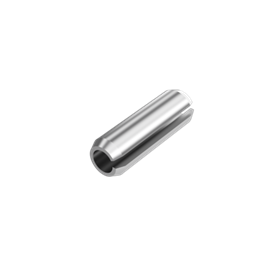
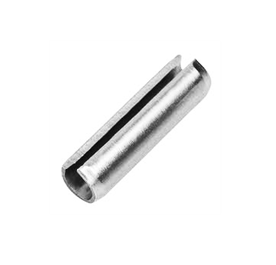
Slotted spring pins—often called roll pins—are hollow, cylindrical fasteners with a longitudinal slot running down the entire length. They are engineered to be oversized relative to the hole they fit into, relying on self-retaining spring force to lock securely into place.

Key Functions and Engineering Benefits

  • Self-Locking Design: The pin compresses upon insertion and exerts continuous outward radial force against the hole wall, preventing loosening caused by heavy vibration or shock.
  • Cost-Efficient Production: They eliminate the need for high-precision reamed holes, as they easily accommodate wider hole tolerances than solid dowel pins.
  • Simplified Assembly: Standard chamfered ends create a smooth lead-in angle, allowing rapid installation using a basic hammer, punch, or automated pneumatic press.

Common Industrial Applications

  • Hinges and Pivots: Providing a low-wear, flexible pivot axis for moving mechanical linkages.
  • Gear and Shaft Anchoring: Securing gears, pulleys, or sprockets directly to rotating shafts to transmit light-to-medium torque.
  • Cross-Pinning Fasteners: Acting as a reliable safety lock to prevent larger nuts or components from backing off.

Our Slotted Spring Pins are available to purchase directly online.

Internal Circlips: What They Are and How to Use Them

When securing components inside a mechanical housing, you need a fastening solution that is reliable, space-saving, and capable of handling high rotational forces. Enter the internal circlip—also frequently called an internal retaining ring.

Though small and often hidden from view, these components are vital to the structural integrity of automotive transmissions, electric motors, and heavy machinery.


What is an Internal Circlip?

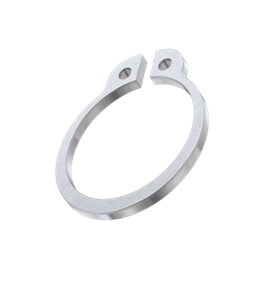
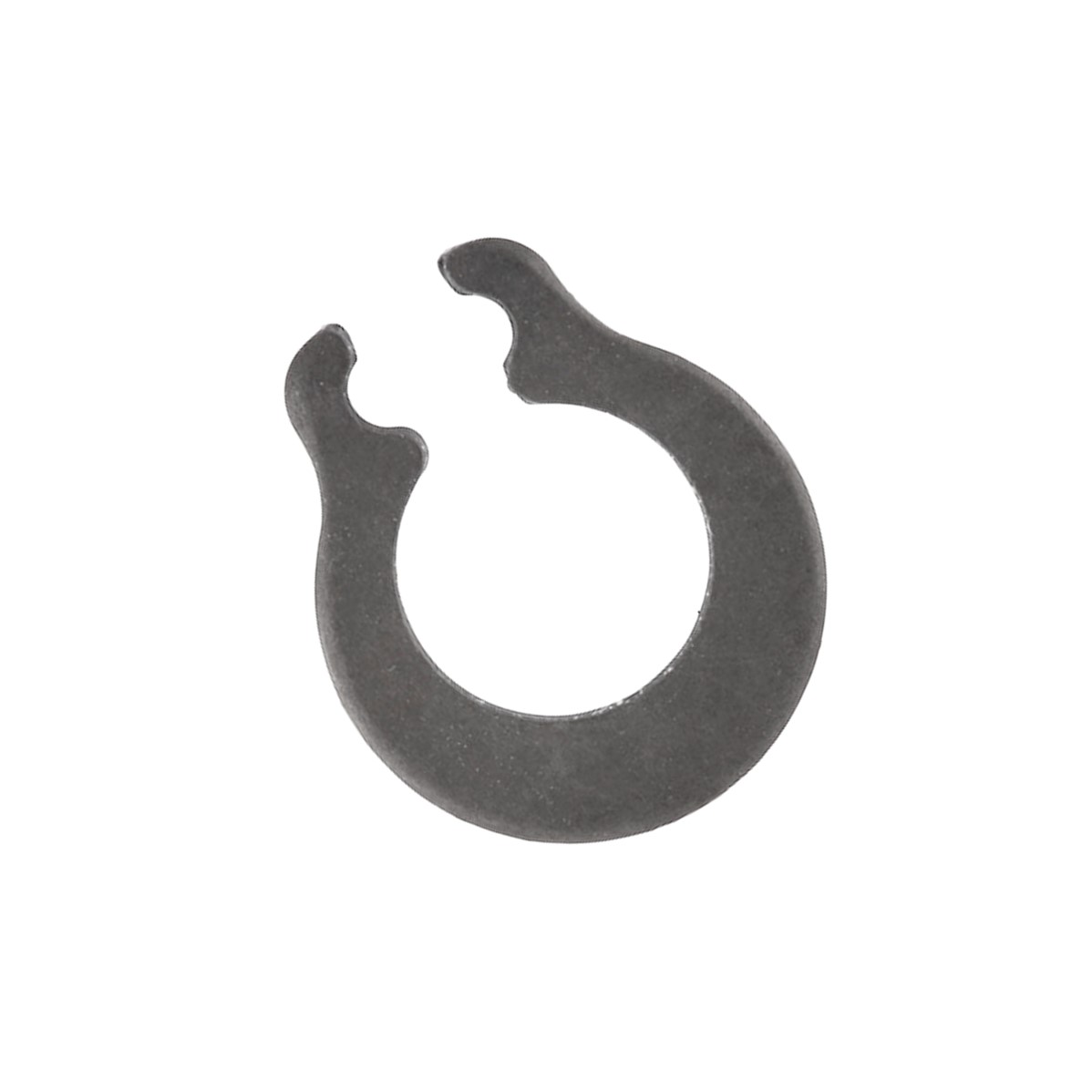
An internal circlip is a semi-flexible, engineered metal ring with an open end. Unlike external circlips, which stretch open to fit over a shaft, internal circlips are designed to be compressed inward. They are installed directly inside a cylinder, bore, or pipe housing.

Once fitted into a specially machined groove inside the bore, the ring snaps outward. This creates a strong, rigid shoulder that prevents bearings, pins, or gears from slipping out horizontally.

       [Housing Wall] 
  _______________________

 |   __  [Groove]  __   |
 |  |  |          |  |  |
 |  |  |==[CLIP]==|  |  | <--- Fits tightly into internal groove
 |  |__|          |__|  |
 |_______________________|

Key Mechanics and Design Features

  • The Lug Holes: Look closely at an internal circlip, and you will notice two small tabs with holes at the open ends. These are lug holes. They allow specialized pliers to grip the ring securely during installation and removal.
  • Sizing Rules: Internal circlips are always categorized and purchased by the nominal bore diameter (the inside diameter of the housing), not the diameter of the groove or the uncompressed ring itself.
  • Tapered Design: The ring’s width decreases from the top center down to the tips. This specific geometry ensures that the circlip maintains a perfectly circular shape when compressed, distributing pressure evenly across the housing groove.

Our Internal Circlips are available to purchase directly online.

How Disc Springs Work

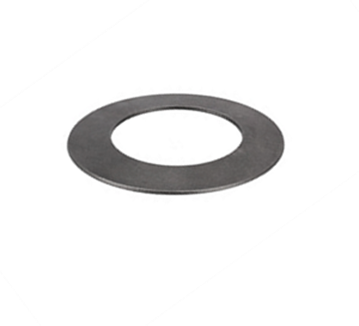
Disc Springs—often called Belleville washers—are conically shaped annular discs that provide a mechanical force when deformed along their axial axis. Unlike standard flat washers, their unique geometry allows them to act as heavy-duty springs in remarkably tight spaces.

1. The Core Mechanics

  • Axial Deflection: When you apply a load to the spring, the cone flattens.
  • Energy Storage: This flattening action stores mechanical energy.
  • High Force: They generate massive resistance with very little movement (deflection).

2. Versatile Stacking Configurations

You can stack disc springs in different ways to radically alter their performance:

  • In Series (Face-to-Face): Stacking them top-to-bottom increases the total deflection (travel distance) while keeping the load capacity the same as a single spring.
  • In Parallel (Nested): Stacking them in the same direction multiplies the load capacity while keeping the deflection the same as a single spring.
  • In Combination: Mixing series and parallel stacks allows engineers to customize both the force and travel distance for specific industrial needs.
   In Series (More Deflection)         In Parallel (More Force)
          ()()()()                             (((())))

3. Key Applications

  • Bolted Joints: Maintaining tension during thermal expansion or contraction.
  • Clutches & Brakes: Providing consistent, heavy damping forces in automotive systems.
  • Valves: Ensuring tight seals under high-pressure conditions.

Our DIN 2093 Disc Springs are available to purchase online:

A2 vs. A4 Stainless Steel: The Crucial Difference

Choosing the wrong grade can lead to premature component failure. Here is how A2 compares to its premium counterpart, A4 (316 grade):

FeatureA2 Stainless Steel (304)A4 Stainless Steel (316)
Chemical Mix18% Chromium, 8% Nickel18% Chromium, 8% Nickel, 2% Molybdenum
EnvironmentInland, automotive, and domestic useMarine, chemical processing, and coastal use
Acid ResistanceModerateHigh (resists chlorides and pitting)
CostBudget-friendlyPremium pricing

Contact us today for a free quotation on A2 and A4 Stainless products.

Understanding Inverted Lug Circlips: The Flush-Fit Retaining Rings

Understanding Inverted Lug Circlips: The Flush-Fit Retaining Rings

Inverted lug circlips (retaining rings) offer a space-saving alternative to standard retaining rings. Standard circlips have positioning holes (lugs) that extend outward or inward. In contrast, inverted lug circlips reverse this design. Their lugs face inward on external rings, or outward on internal rings.

This design modification creates a perfectly flush surface when installed.


Key Advantages:

  • High Clearance: The flipped lugs sit entirely inside the groove or housing to prevent interference with nearby moving components.
  • Large Radial Uniformity: These rings maintain a much lower profile than standard fasteners.
  • Better Aesthetic Finish: The hidden lugs provide a clean, streamlined look for exposed mechanical assemblies.
  • Continuous Contact: They offer high uniform seating around the entire circumference of the shaft or bore.

Defying Extreme Pressures: The Role of Disc Springs in Oil & Gas

In the oil and gas sector, equipment must survive some of the most hostile environments on Earth. High temperatures, corrosive chemicals, and immense pressures quickly destroy standard coil springs. To maintain constant sealing and structural integrity, the industry relies heavily on disc springs (also known as Belleville washers).

These conical-shaped rings pack immense force into tight spaces, making them critical for downhole, subsea, and surface equipment.

Why Disc Springs Beat Coil Springs in Heavy Industry:

Standard coil springs deform or lose tension under extreme oilfield conditions. Disc springs offer distinct advantages:

  • High Force, Low Space: They generate massive clamping force with minimal axial deflection.
  • Customisable Stack Configurations: Stacking them in series increases deflection, while stacking them in parallel increases force. Stacking in both combines both benefits.
  • Damping Capabilities: Parallel stacking absorbs heavy shocks and dampens harsh vibrations from drilling operations.
  • Predictable Performance: They maintain consistent force even during severe thermal expansion and contraction.

Exotic Materials for Harsh Environments

Standard carbon steel will fail rapidly in sour gas or subsea applications. Oil and gas disc springs rely on specialized metallurgy:

  • Inconel (X-750 and 718): The industry standard for high-temperature and highly corrosive environments. They resist hydrogen embrittlement and sour gas (H₂S).
  • Titanium Alloys: Selected for subsea applications where lightweight components and absolute saltwater corrosion resistance are vital.
  • Phos Bronze / Nimonic: Used in specific downhole tools requiring non-magnetic properties or extreme creep resistance at temperatures exceeding 500°C.

Critical Oilfield Applications

  • Valves and Actuators: Disc springs maintain a constant live-load on valve stem packings to prevent hazardous fluid or gas leaks.
  • Downhole Drilling Tools: They absorb massive impact loads in drilling jars and shock tools, protecting sensitive electronics.
  • Subsea Wellheads: They supply the permanent, high-tonnage clamping force required to hold subsea connectors secure against ocean currents and high pressure.
  • Blowout Preventers (BOPs): They act as fail-safe energy storage units to mechanical close gates when hydraulic pressure fails.

Our Standard Carbon Steel Disc Springs to DIN 2093 are available to purchase online.

Why Use Extractable Dowel Pins? (The Blind Hole Problem)

Imagine you are servicing a heavy stamping die or an injection mold. The alignment pins are pressed into a “blind hole”—a hole that does not drill all the way through the part.

If you use a standard solid pin, there is no way to tap it out from the reverse side. Technicians are often forced to weld a nut to the top of the pin or attempt to drill it out. This ruins the pin, risks damaging the expensive surrounding component, and wastes valuable production time.

Extractable pins completely eliminate this issue, offering three massive benefits:

  1. Zero Component Damage: You pull the pin cleanly without marring the workpiece.
  2. Rapid Maintenance: Molds, fixtures, and dies can be stripped down and rebuilt in a fraction of the time.
  3. Repeatable Accuracy: Because the removal process is non-destructive, the integrity of the reamed hole is preserved for future assemblies.

How to extract them: Step-by-Step

Removing these pins requires the right mechanical leverage. Never use pliers or vice grips, as they will score the precision-ground exterior.

  1. Clear the Thread: Ensure the internal thread is free of debris, grease, or metal shavings.
  2. Engage the Tool: Thread a matching pull-bolt, a mechanical puller sleeve, or a specialized slide hammer into the pin.
  3. Apply Axial Force: Use the tool to apply a straight, perpendicular upward force. The slide hammer will pop the pin out cleanly, even if it is a heavy press-fit.

Where can I buy Extractable Dowel Pins?

There are available to buy directly through our online store:

Ultimate Guide to Shakeproof Washers: Stop Loose Screws for Good.

Loose fasteners can cause catastrophic equipment failure. Vibrations from motors, vehicles, and daily use slowly turn screws until they detach. Regular flat washers cannot prevent this. You need shakeproof washers.

This guide explains how these small components protect your projects from severe vibration.


What is a Shakeproof Washer?

A shakeproof washer is a specialized locking component designed to prevent nuts, bolts, and screws from loosening. Unlike standard flat washers that just distribute weight, these hardware pieces use mechanical tension and physical barriers to grip the mating surfaces. They are critical in high-vibration environments like automotive engines, industrial machinery, and household appliances.


The Core Types of Shakeproof Washers

Choosing the right type depends on your specific assembly material and the level of vibration.

1. External Tooth Lock Washers

  • Design: Teeth extend outward from the outer rim.
  • Mechanism: The teeth bite into the bolt head and the mating surface.
  • Best For: Maximum torsional resistance with large screw heads.

2. Internal Tooth Lock Washers

  • Design: Teeth project inward toward the center hole.
  • Mechanism: The teeth bite into the shank of the fastener.
  • Best For: Small screw heads or applications requiring a clean, snag-free exterior finish.